
When a supplement promises “brain benefits,” most people imagine a quick change: sharper focus in an hour or a noticeable boost in motivation by lunchtime. Deazaflavin is not that type of ingredient. It is better described as a behind-the-scenes player, one that is discussed for its relationship to cellular energy and redox biology, the chemistry that helps cells move electrons around to make usable energy.
Deazaflavin has become a buzzword in longevity circles, often in the same breath as NAD+ and mitochondria. That combination can sound intimidating, but the basic idea is surprisingly simple: the brain is an energy-hungry organ, and cognitive performance often suffers when cellular energy systems are under strain. If deazaflavin supports those systems, it could plausibly support mental stamina and cognitive resilience, especially as we age.
What Deazaflavin Is, In Plain Language
Deazaflavins are flavin-like compounds. Flavins are part of the body’s normal energy machinery. Riboflavin (vitamin B2), for example, is used to create cofactors like FAD and FMN that help enzymes run energy and antioxidant reactions. Deazaflavins have structural similarities that allow them to participate in redox chemistry in unique ways, which is why they have long been used in biochemical research as cofactor analogs.
Why Deazaflavin Shows Up With NAD+ Conversations
NAD+ is essential for energy production and cellular repair. It is involved in processes that affect mitochondrial performance, DNA repair, and stress response. Because NAD+ biology is tied to aging, many longevity strategies focus on maintaining NAD-related function. Deazaflavin derivatives have been studied for their redox behavior and potential to support cellular energy reactions in ways that resemble or complement natural cofactors.
That is the core positioning: deazaflavin is discussed as a cellular energy support ingredient, not as a stimulant.
Why Cellular Energy Is A Brain Health Issue
The brain uses a large share of the body’s energy. Neurons maintain electrical gradients, send signals, and constantly remodel connections. If energy production becomes less efficient, cognitive performance can feel less efficient too.
Low Energy Can Look Like “Brain Fog”
Not all brain fog is psychological. Sometimes it is simply the experience of a brain that is under-fueled or over-burdened. People describe it as slower thinking, reduced mental endurance, and more effort required to stay focused. Cellular energy support is relevant here because improving the energy environment can, in theory, support clearer day-to-day function.
Mitochondria Are Central To Cognitive Resilience
Mitochondria produce ATP, the energy currency cells use to do work. They also influence oxidative stress and cell signaling. When mitochondrial function declines with age, neurons may become less resilient. This is one reason so many longevity approaches intersect with brain health, even when the products are not “brain supplements” in the traditional sense.
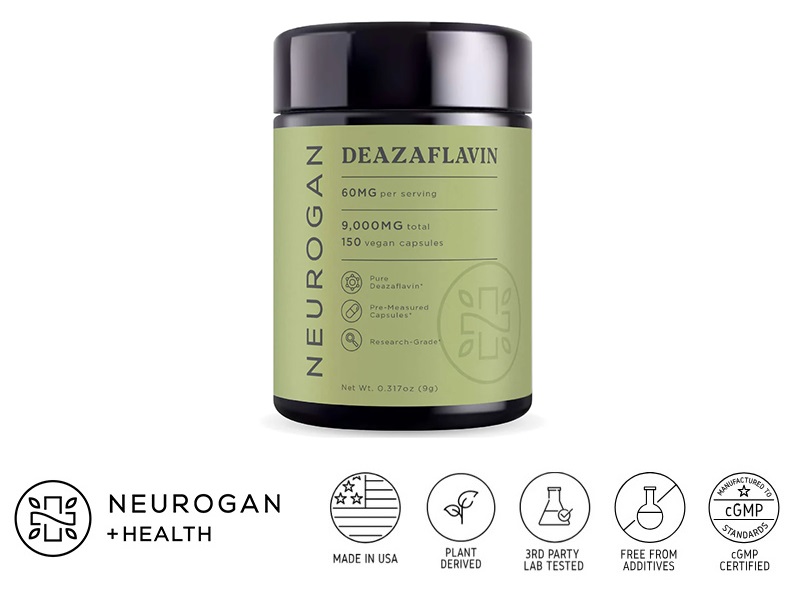
How Deazaflavin May Connect To Brain Health
There are a few main pathways that help explain why deazaflavin is discussed for cognitive longevity. The evidence base is still developing, but these mechanisms are biologically meaningful.
Supporting Mitochondrial Energy Potential
Research on certain 5-deazaflavin derivatives has examined their effects on mitochondrial energy dynamics in neural contexts. For example, studies involving the deazaflavin derivative TND1128 have reported effects consistent with mitochondrial activation in brain tissue models and have explored its potential in age- and disease-related neuronal decline contexts.
For a brain health reader, the practical takeaway is this: some deazaflavin derivatives are being investigated for how they influence the cellular “battery system” in neural tissue. That supports the plausibility of brain-related benefits, but it does not automatically mean any supplement will produce measurable cognitive changes in humans.
NAD-Related Function And Cellular Repair Themes
NAD+ is involved in processes linked to cellular repair and stress response, including pathways often discussed in aging biology. Deazaflavin compounds are frequently studied as redox-active cofactors or cofactor analogs, which helps explain why they are discussed alongside NAD-focused strategies.
From a cognitive standpoint, the relevance is indirect: healthier cellular energy and repair capacity can support resilience, especially under stress or with age-related decline in efficiency.
Redox Balance And Oxidative Stress Management
Oxidative stress is one of the wear-and-tear factors associated with brain aging. Redox-active compounds can influence how cells manage oxidative load. Deazaflavins are studied for their redox properties in biochemical contexts, and some preclinical work has examined protective effects under oxidative stress conditions.
Again, the responsible framing is “may support.” A healthier redox environment can support cellular function, but it is not a guarantee of improved memory scores.
What Deazaflavin Is Likely To Feel Like
Because deazaflavin is discussed as a foundational energy support ingredient, it is not usually described as a dramatic, immediate experience. If it helps, many people would expect changes that feel like better baseline function rather than a sharp peak.
Possible Baseline-Oriented Benefits
- More consistent mental energy, especially during long days
- Better mental stamina for work that requires sustained focus
- Improved resilience, meaning less cognitive “collapse” after stress
What It Probably Will Not Do
- Provide a stimulant-like buzz or immediate focus surge
- Replace sleep or compensate for chronic burnout
- Act as a standalone solution for complex cognitive concerns
Key Takeaways
Deazaflavin is under-the-radar because it is not a classic nootropic. Its brain relevance comes from cellular energy and redox biology, especially its association with mitochondrial and NAD-related themes. Preclinical research on certain deazaflavin derivatives has examined mitochondrial effects in neural contexts, which supports the plausibility of cognitive benefits, but human cognition outcomes are still emerging.
For people focused on cognitive longevity, mental stamina, and healthy aging, deazaflavin is a supplement worth watching, especially when paired with the big lifestyle levers that keep the brain resilient.