
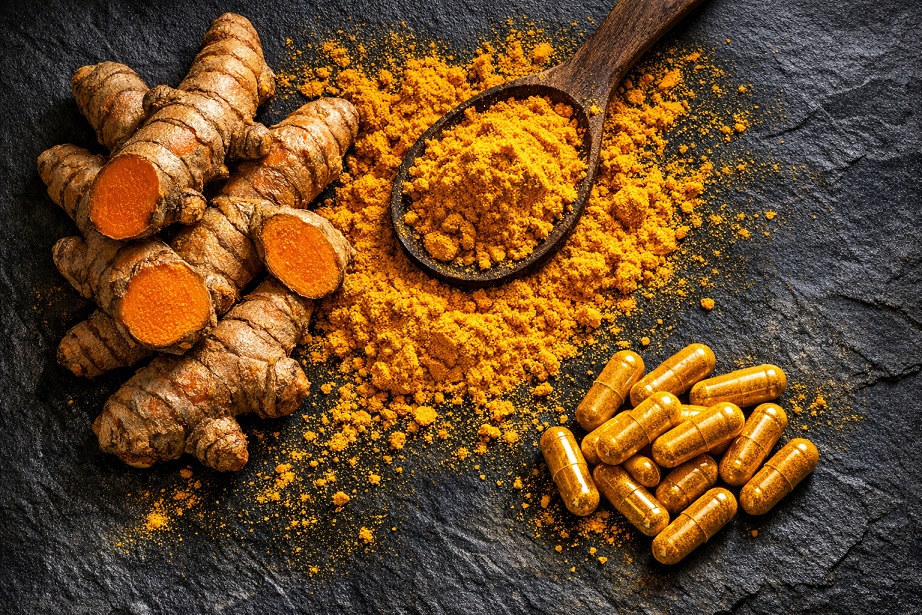
Walk through any health food store and you’ll spot turmeric just about everywhere. It’s in teas, capsules, lattes, and protein bars. But beneath all the wellness-world buzz, there’s a genuinely interesting story rooted in centuries of traditional medicine and a growing body of rigorous scientific research. So what is turmeric actually good for, and why do so many joint health experts keep coming back to it? The answer, as it turns out, has everything to do with a compound called curcumin.
From Kitchen Spice to Research Laboratory
Turmeric (Curcuma longa) is a flowering plant in the ginger family, and its bright orange root has been used in Ayurvedic and traditional Chinese medicine for over four thousand years. Historically, it was prescribed for everything from digestive complaints to wound healing. What traditional healers were observing through experience, modern scientists have since traced back to a group of active compounds in turmeric called curcuminoids, the most potent of which is curcumin.
Curcumin is what gives turmeric its distinctive golden color, and more importantly, it’s the compound responsible for most of turmeric’s well-documented health benefits. Research into curcumin has exploded over the past few decades, with thousands of published studies examining its effects on inflammation, oxidative stress, immune function, and joint health specifically.
What Curcumin Does at the Cellular Level
One reason curcumin generates so much scientific excitement is that it appears to work on multiple biological pathways simultaneously. At the cellular level, curcumin is a potent inhibitor of NF-kB, a molecule that acts like a master switch for inflammation in the body. When NF-kB is activated, it triggers the production of inflammatory cytokines, the chemical messengers that cause tissue swelling, pain, and degradation. By dialing down NF-kB activity, curcumin helps interrupt the inflammatory cascade before it spirals out of control.
Curcumin also inhibits enzymes called COX-2 and 5-LOX, both of which play key roles in producing prostaglandins and leukotrienes, compounds that contribute directly to joint pain and swelling. Interestingly, this mechanism is similar to how some pharmaceutical anti-inflammatories work, but curcumin achieves it through natural pathways and without the gastrointestinal side effects associated with many over-the-counter pain medications.
Curcumin and Joint Health: What the Research Shows
When it comes to joints specifically, the research on curcumin is quite promising. Multiple clinical trials have examined curcumin’s effects in people with osteoarthritis, the most common form of joint disease characterized by the gradual breakdown of cartilage. Several of these trials have found that curcumin supplementation meaningfully reduces joint pain and improves physical function, with results in some studies comparing favorably to conventional anti-inflammatory medications.
A widely cited pilot study published in the Journal of Alternative and Complementary Medicine found that curcumin performed comparably to ibuprofen in reducing knee pain and improving stair-climbing ability in patients with knee osteoarthritis. Another study, published in the journal Phytotherapy Research, found that curcumin significantly reduced pain and swelling in subjects with rheumatoid arthritis, outperforming a standard anti-inflammatory drug in some measures.
Protecting Cartilage from Long-Term Damage
Beyond pain relief, curcumin shows real promise as a long-term protective agent for joint tissue. Cartilage breakdown is driven in part by enzymes called matrix metalloproteinases (MMPs), which essentially chew away at the connective tissue inside joints. Studies suggest that curcumin can suppress MMP activity, potentially slowing the rate at which cartilage degrades over time.
This is a meaningful distinction. Many people think of joint supplements purely in terms of symptom relief, but the more interesting goal is actually preserving joint integrity over the long haul. Think of it like this: you could patch a leaky roof every time it rains, or you could treat the underlying structural problem. Curcumin’s potential to address the biological mechanisms of cartilage degradation suggests it might be doing a bit of both.

Antioxidant Effects and Oxidative Stress in Joints
Curcumin is also a powerful antioxidant, and this matters for joint health more than people often realize. Oxidative stress, caused by an imbalance between free radicals and the body’s antioxidant defenses, contributes to joint tissue damage and the chronic low-grade inflammation that accelerates cartilage loss. By neutralizing free radicals and boosting the body’s own antioxidant enzymes, curcumin adds another layer of protection to vulnerable joint tissue.
The Absorption Problem (And How Science Has Solved It)
Here’s the catch with curcumin: it’s not very well absorbed by the body on its own. Raw curcumin from turmeric powder has notoriously poor bioavailability. It’s metabolized quickly in the gut and liver, meaning very little of it actually reaches the bloodstream and gets to work in your joints. This is why eating curry every day, while delicious, probably isn’t a reliable joint health strategy.
Fortunately, food scientists and supplement formulators have developed several ways to significantly enhance curcumin’s bioavailability. One of the most common approaches involves combining curcumin with piperine, a compound found in black pepper that inhibits the enzymes that break curcumin down. More advanced delivery systems, such as phospholipid complexes and water-dispersible formats, have taken this further, producing curcumin extracts that absorb many times better than standard turmeric powder.
When evaluating any curcumin supplement, the form matters enormously. A supplement using a high-quality, bioavailable curcumin extract will deliver far more therapeutic benefit per dose than one relying on plain turmeric powder, even at a higher stated dose.
Beyond Joints: Other Areas Where Turmeric Shines
While joint health is one of turmeric’s most researched applications, curcumin’s anti-inflammatory and antioxidant properties have implications across many body systems. Research is ongoing into curcumin’s potential roles in supporting cardiovascular health, cognitive function, metabolic health, and gut integrity. Its ability to modulate inflammatory pathways makes it relevant to virtually any condition where chronic inflammation plays a contributing role.
That said, it’s worth keeping expectations grounded in evidence. Curcumin is not a cure for any condition, and the research, while exciting, is still evolving. What can be said with confidence is that curcumin is one of the most extensively studied natural compounds in modern nutritional science, and its effects on joint inflammation and comfort have some of the strongest support in that body of research.
Getting the Most from Turmeric
If you’re considering adding turmeric or curcumin to your joint health routine, a few practical points are worth keeping in mind. Look for a supplement that specifies the form of curcumin used and its absorption profile. Standardized extracts will typically list their curcuminoid content by percentage. Consistency matters too. Curcumin’s benefits tend to accumulate over weeks of regular use rather than appearing overnight.
Pairing curcumin with complementary ingredients that support different aspects of joint health, such as boswellia, glucosamine, or MSM, is a common and well-reasoned approach, as these compounds tend to work through overlapping but distinct pathways. As always, if you’re managing a specific joint condition, it’s smart to discuss any new supplement with a qualified healthcare provider.
What’s clear is that turmeric has earned its reputation, not just as a kitchen staple, but as one of nature’s most versatile and well-researched tools for keeping joints comfortable, mobile, and healthy over the long term.