

If you spend any time around artificial intelligence, it is easy to start wondering where the human brain still fits. Language models can write code, summarize research, and even suggest ideas. Image models can generate concept art in seconds. With all of this digital help, is your own mental effort still important, or are you just the person who clicks the buttons?
The honest truth is that AI has become a powerful tool, but it did not retire the human brain. It made brainpower more important, not less. The difference is that the value has shifted. Instead of doing everything by hand, your mind now shines most brightly in the areas where machines still struggle: context, meaning, judgment, and long term thinking.
Contents
What AI Is Good At, And What It Is Not
To understand the value of human cognition, it helps to draw a rough map of what AI systems actually do well. Large models, especially those trained on big data sets, excel at recognizing patterns, generating plausible text, and producing options quickly. They can act like tireless assistants that never get bored of repetitive tasks.
Pattern Crunchers At Scale
Most current AI tools are very good at taking in enormous amounts of data and spotting patterns that a human might miss. They can scan logs for anomalies, search medical images for subtle markers, or propose many versions of a design. In these narrow roles, they act like microscopes for information.
What they lack is real understanding. A model can predict which words are likely to come next or which pixels usually appear together, yet it does not know what those words or pixels mean in the way a person does. It has no lived experience, no goals of its own, no emotional history.
Weak Spots Around Context And Consequences
Because AI works through pattern matching, it can be fooled by unusual context. It may give confident answers that are subtly off, or it may miss the social and emotional impact of its suggestions. A hiring recommendation, for example, is more than a pattern in resumes. It sits inside real lives, legal rules, and company culture.
This is where your brain steps in. You can see the bigger picture, notice when something feels wrong, and connect the dots between a recommendation and its real world impact. That skill is not optional. It is the safety net under every AI powered workflow.
The Cognitive Skills That Still Give Humans An Edge
The more AI spreads into day to day work, the more certain mental abilities rise in value. These are the skills that do not automate easily, because they depend on being a human with a body, a story, and a sense of meaning.
Judgment And Prioritization
AI can generate many options. It can rank them by simple metrics. What it cannot do is fully understand your deeper goals, your ethics, your personal or organizational values, or the tradeoffs you are willing to accept. Choosing between two technically correct paths often requires human judgment.
Your brain weighs soft factors: trust, relationships, timing, and risk appetite. You can sense when a technically efficient choice might damage long term reputation or harm a vulnerable group. That kind of prioritization does not come from data alone.
Nuance And Ambiguity
Real problems are often messy. Requirements are unclear, people disagree, and information is incomplete. Human minds are used to living in this fog. You constantly interpret tone, guess at hidden motives, and work with partial evidence.
AI tends to perform best when tasks are clear and data is well labeled. When everything is fuzzy, your ability to sit with uncertainty and still move forward becomes a major advantage. You are not just filling in blanks, you are co creating the problem definition.
Creativity With Constraints
Yes, AI can produce surprising images, text, or sound. But its creativity lives inside the space of examples it has seen. It mixes, matches, and transforms. Your creativity works differently. You can invent entirely new constraints, break your own rules, or borrow an idea from a completely unrelated domain.
Think of AI as a powerful brainstorming partner. It can shower you with raw material. Your brain then selects, edits, reframes, and sometimes ignores its outputs entirely to follow a hunch that no model suggested.
Where Brain Health Meets AI Skill
If your cognitive edge matters more than ever, then the health of your brain becomes a crucial part of your AI toolkit. Tired, foggy thinking will not suddenly become sharp just because you have access to advanced software. In fact, AI can amplify both good and bad decisions.
Attention As A Precious Resource
Many AI tools are fast, noisy, and seductive. It is easy to spend an entire day jumping between prompts, dashboards, and notifications without doing deep work. Your attention, not your access to models, becomes the bottleneck.
Healthy attention depends on sleep, stable blood sugar, reasonable stress levels, and periodic breaks. When those needs are ignored, focus fractures into tiny fragments. That makes it harder to notice subtle issues in AI outputs or catch important inconsistencies.
Working Memory And Model Oversight
Working memory is the mental scratchpad where you hold ideas temporarily while thinking. Overseeing AI systems often means tracking multiple constraints, edge cases, and goals at once. If working memory is strained, it becomes easier to accept flawed suggestions or miss hidden assumptions.
Supporting working memory through lifestyle, training, and sometimes carefully chosen brain support strategies can make you a sharper reviewer of AI output. You are not just glancing at results, you are actively comparing them to your internal models of how things should behave.
Emotional Regulation Around Automation
AI work can stir up strong feelings: excitement, anxiety, job fear, or even guilt about replacing tasks that humans used to do. Emotional overload can narrow your thinking and lead to extreme reactions, such as resisting helpful tools or handing them too much control.
A stable, regulated nervous system helps you respond rather than react. You can see AI as a tool, not as a threat or a savior. Practices that support emotional balance, from movement to mindfulness to healthy social connection, indirectly improve your AI related decisions.
Staying Competitively Human In An AI Rich World
If you want your brain to remain valuable alongside AI, it helps to think of your cognitive abilities as a skill stack you can actively train. The goal is not to race the machines at their strengths, but to lean into the human abilities that complement them.
Develop Meta Skills
Technical knowledge about AI is useful, yet the most durable strengths are meta skills such as learning how to learn, structuring complex problems, and communicating clearly. These skills transfer between tools and roles, even as specific technologies change.
Reading broadly, working on challenging projects, teaching others, and reflecting on your own thinking patterns can all build these meta skills. In a sense, you are training your inner “operating system” rather than just installing new apps.
Care For The Brain That Uses The Tools
It is easy to spend hours tweaking an AI workflow while completely ignoring basic self care. Yet the brain that runs those workflows is still physical tissue that needs oxygen, nutrients, rest, and recovery.
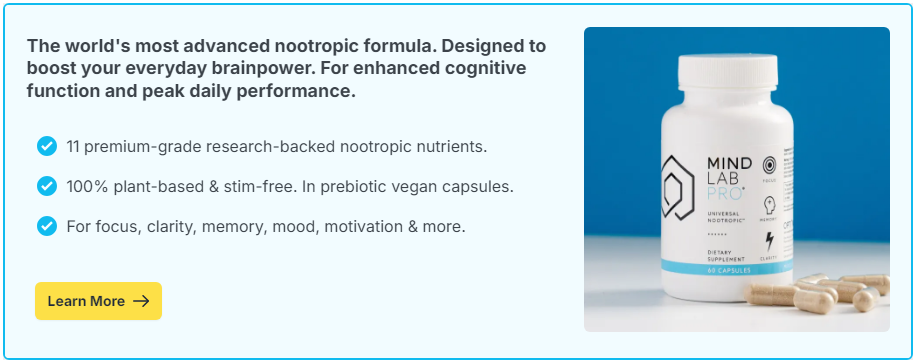
Many people who work heavily with AI find it helpful to treat brain health habits as non negotiable infrastructure. Regular sleep, movement, hydration, and thoughtful nutrition become just as important as software updates. Some also choose to support cognition with targeted supplements, always with the understanding that these are additions, not replacements, for the fundamentals.
Artificial intelligence may keep evolving, but it still relies on human brains to guide, question, and apply it wisely. Your cognitive edge is not an antique. It is the steering wheel. The better you care for it, the more safely and creatively you can drive in an AI powered world.