Natural Nootropics vs.
Prescription Cognitive Drugs
A factual side-by-side comparison of mechanism, cognitive effect, side effect profile, dependency risk, and long-term sustainability – across 13 natural and pharmaceutical cognitive agents.
| Name | Type | Mechanism | Primary Cognitive Effect | Dependency Risk | Rx Required | Long-Term Use | In MLP? |
|---|
† Adderall and Ritalin are Schedule II controlled substances in the United States. Modafinil is Schedule IV. Legal status, prescribing criteria, and penalties for unlicensed possession vary significantly by country. Donepezil is prescription-only and indicated for diagnosed Alzheimer’s disease. Piracetam’s legal status varies by jurisdiction – it is unscheduled in some countries and unapproved for sale as a dietary supplement in others.
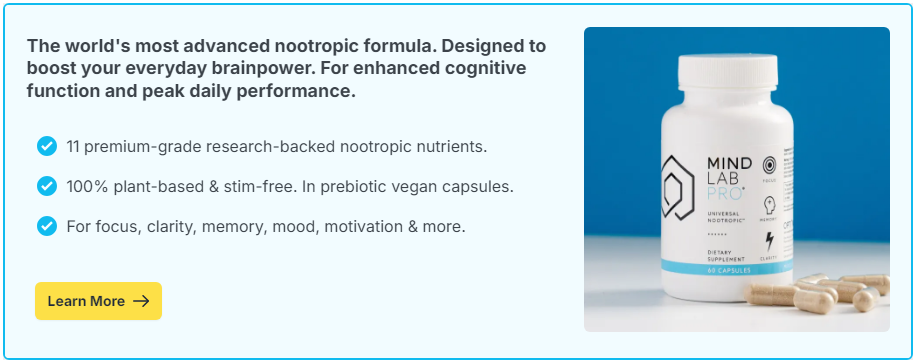
Mind Lab Pro includes 8 of the natural nootropics in this comparison alongside other research-backed brain nutrients – a stimulant-free, non-prescription formula designed for daily sustainable use, without dependency risk or the side effect profiles associated with pharmaceutical cognitive agents.
Natural Nootropics vs. Prescription Cognitive Drugs: A Side-by-Side Comparison
Interest in cognitive enhancement has produced two parallel markets that rarely get compared honestly in the same place: prescription and controlled drugs used off-label for cognitive performance, and evidence-backed natural nootropic ingredients. This interactive table puts both categories in the same frame – covering mechanism, cognitive effect, dependency risk, prescription status, and long-term sustainability across 13 entries. The goal is factual clarity, not advocacy for either category.
Important: This page is for informational purposes only. Prescription medications require medical supervision. Nothing here constitutes medical advice or a recommendation to use or discontinue any drug. If you are considering any of the pharmaceutical agents listed, consult a qualified healthcare provider.
What the Comparison Actually Shows
The most striking pattern in this data is not potency – several prescription drugs produce more immediate and dramatic cognitive effects than any natural nootropic. What separates the two categories most clearly is the sustainability and risk profile of long-term use. Adderall and Ritalin are Schedule II controlled substances with well-documented dependency and withdrawal profiles. They were developed and approved for ADHD, not healthy adult cognitive enhancement, and the evidence that they meaningfully improve cognition in neurotypical adults – beyond masking fatigue – is considerably weaker than their cultural reputation suggests. Modafinil produces reliable wakefulness and executive function benefits but carries moderate dependency risk and is associated with rebound fatigue when discontinued.
Natural nootropics occupy a different position on every dimension of this comparison. None of the eight natural ingredients in this table carry any clinically significant dependency risk. All are rated sustainable for long-term daily use. None require a prescription. The trade-off is onset – no natural nootropic replicates the acute stimulant effect of amphetamines, and several of the strongest natural options (Bacopa Monnieri, Lion’s Mane Mushroom) require weeks of consistent use before their primary benefits manifest. This is not a limitation of potency; it is a reflection of how the mechanisms work.
The Mechanism Difference
Most pharmaceutical cognitive drugs work by forcing acute changes in neurotransmitter availability – blocking reuptake, inhibiting breakdown enzymes, or stimulating release. These mechanisms produce fast, noticeable effects, but they also explain the tolerance and dependency patterns: the brain compensates for artificially elevated neurotransmitter levels by downregulating receptor sensitivity over time. Natural nootropics tend to work through supportive and neuroprotective mechanisms – precursor supply, membrane integrity, blood flow, NGF stimulation, cortisol modulation – that work with existing neurochemistry rather than overriding it. Citicoline, for example, provides the raw materials for acetylcholine synthesis rather than blocking its breakdown. Phosphatidylserine supports the cell membrane environment in which neurotransmitter receptors operate. These mechanisms do not produce the same acute subjective effect, but they also do not produce the receptor downregulation that drives tolerance.
How to Use This Table
Use the Type filter to view natural and pharmaceutical entries separately. The Dependency Risk and Long-Term Use filters are the most analytically useful for anyone evaluating options for sustained cognitive support rather than acute performance situations. Filtering to Sustainable and None/Low dependency isolates the ingredients appropriate for daily, uninterrupted use – which maps directly to how Mind Lab Pro is formulated and intended to be taken.
Mind Lab Pro includes 8 of the natural nootropics in this comparison alongside other research-backed brain nutrients – a stimulant-free, non-prescription formula designed for daily sustainable use, without the dependency risk or side effect profiles associated with pharmaceutical cognitive agents.