Single-Ingredient Series · Phosphatidylserine
Cognitive Stress Index
Phosphatidylserine is the brain’s primary cortisol regulator — it blunts the hormonal cascade that degrades memory, focus, and resilience under pressure. Map your stress load and discover your PS protocol.
Stress Profile Inputs
5
Your average subjective stress load — work, relationships, financial pressure, life events.
5
Mental demands of your work — decisions, problem-solving, high-stakes thinking daily.
35
PS levels in the brain decline with age — older brains produce less and require more external support.
5
Poor sleep elevates baseline cortisol — compounding the stress PS must regulate.
Which best describes how stress currently manifests in your cognition?
Your Cognitive Stress Index
Stress Index
Moderate Stress Load
Your cortisol exposure is producing measurable cognitive drag. Phosphatidylserine’s cortisol-blunting mechanism is directly applicable to your profile.
Your PS Protocol
Standard Protocol: 100mg with Breakfast
Based on your stress index, a morning dose positions PS to blunt the cortisol awakening response — the natural cortisol spike within 30 minutes of waking that sets your baseline stress tone for the day.
Taking PS 30–60 minutes before high-stakes cognitive events blunts the cortisol surge that impairs working memory and decision quality under pressure.
PS is a phospholipid — always take with a fat-containing meal. Absorption drops significantly when taken on an empty stomach, reducing bioavailability to the brain.
For stress-driven use, split dosing — morning and pre-stressor — outperforms single large doses by maintaining PS availability across your two highest cortisol windows.
PS works synergistically with DHA — omega-3 fatty acids are incorporated into the same neuronal membranes PS repairs. Combined intake measurably outperforms either compound alone in memory studies.
Mechanism
Phosphatidylserine occupies a unique position in stress neuroscience: it is the only compound with FDA-qualified claim status for cognitive decline, and its primary mechanism is not stimulation but regulation. By modulating the HPA axis — the hypothalamic-pituitary-adrenal stress circuit — PS lowers the cortisol ceiling during acute stress, preventing the hippocampal damage that chronic cortisol exposure inflicts on memory and emotional regulation.
Complete Cognitive Formula
PS Works Best Alongside a Full Nootropic Stack
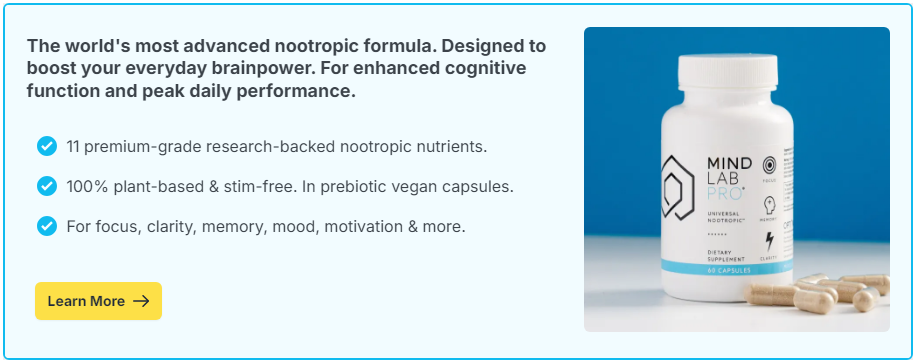
Mind Lab Pro includes Phosphatidylserine alongside 10 other research-backed brain nutrients — each chosen to complement and amplify the others in a single daily formula.
What Is Phosphatidylserine and How Does It Regulate Cognitive Stress?
Phosphatidylserine (PS) is a phospholipid – a fatty compound that forms a critical component of the outer layer of every cell membrane in the body. In the brain, it is particularly concentrated in neuronal membranes and plays a central role in maintaining their fluidity, permeability, and functional integrity. The brain contains more phosphatidylserine per gram of tissue than any other organ, reflecting how fundamentally this compound is woven into the infrastructure of neural function.
What makes PS extraordinary among nootropic ingredients is its relationship with the stress response. Phosphatidylserine modulates the hypothalamic-pituitary-adrenal (HPA) axis – the neurological and hormonal system that governs cortisol production. When the brain is under stress, the HPA axis triggers cortisol release. Cortisol is useful in short bursts, but chronically elevated cortisol is neurotoxic – it damages hippocampal tissue, degrades memory function, and impairs the prefrontal cortex’s ability to regulate emotion and decision-making. PS blunts the cortisol response, reducing the peak and duration of cortisol elevation following stress exposure.
The Cortisol-Memory Connection
The hippocampus – the brain’s primary memory-formation region – is densely packed with cortisol receptors, an evolutionary feature that allowed stress hormones to rapidly encode threatening experiences into long-term memory. But chronic cortisol exposure exploits this sensitivity to destructive effect: prolonged glucocorticoid elevation causes dendritic retraction in hippocampal neurons and, at sustained high levels, measurable volume loss in hippocampal subfields. This is not a metaphorical description of stress affecting memory – it is a structural, anatomical process that phosphatidylserine’s HPA axis modulation is specifically positioned to prevent.
Clinical research has demonstrated this protective effect directly. PS supplementation has been shown to reduce cortisol levels following both physical and psychological stress challenges, with corresponding improvements in memory performance under stress. It also carries the distinction of holding an FDA-qualified claim for reducing the risk of cognitive dysfunction in older adults – one of very few dietary supplements to have achieved this regulatory recognition.
Age-Related Phosphatidylserine Depletion
The body synthesises phosphatidylserine endogenously, but production declines significantly with age. Brain PS concentrations in older adults are measurably lower than in younger brains, compounding the cognitive vulnerability that comes with age-related changes in HPA axis sensitivity. This depletion-plus-dysregulation pattern means that supplemental PS becomes proportionally more valuable as people age – addressing both the shortfall in production and the increasing difficulty the brain has in regulating its own cortisol response.
About the Cognitive Stress Index Tool
The Phosphatidylserine Cognitive Stress Index on this page maps your cortisol load across multiple dimensions and calculates how that stress exposure is affecting your cognitive function. You input your daily stress level, cognitive demand intensity, age, and sleep quality, and identify your primary stress symptom – memory lapses, racing thoughts, energy crashes, or mood instability. The tool generates a stress index score displayed on an animated gauge, breaks down your cortisol burden across four dimensions, and produces a personalised PS protocol with specific dosing timing recommendations. Phosphatidylserine is one of eleven ingredients in Mind Lab Pro, providing the cortisol regulation and membrane protection that allows the brain to function at its best under pressure.