

When people picture brain health, they often think of crossword puzzles, omega-3s, or that one friend who insists cold plunges are the answer to everything. Helpful habits matter, but brain longevity also depends on something less visible: the quality of your cellular environment. If cells are constantly stressed, energy systems strain, repair slows, and mental resilience can take a hit.
Two themes have become popular in modern longevity conversations because they speak directly to that cellular environment: NAD+ and senolytics. NAD+ (nicotinamide adenine dinucleotide) supports cellular energy and repair, while senolytics are compounds studied for their ability to target senescent cells under certain conditions. The interesting part is how these ideas connect. Senescent cells can contribute to inflammatory signaling, and inflammation can accelerate NAD+ breakdown. Supporting a cleaner, calmer internal environment may help the body preserve NAD+ and, by extension, support brain resilience.
Here we explain how senolytics and NAD+ fit together, why quercetin and fisetin are often discussed as a pair, and how this framework can support brain health goals.
Contents
NAD+ And The Brain’s Cellular Energy System
NAD+ is a molecule used in many reactions that turn nutrients into usable cellular energy. It also supports enzymes involved in maintenance tasks, including DNA repair and stress adaptation. NAD is often discussed in two forms:
- NAD+, used broadly in metabolic and repair reactions
- NADH, the form that carries electrons to help drive energy production
The brain relies on steady energy because neurons are always working, maintaining electrical signaling, managing neurotransmitters, and coordinating with support cells. When NAD+ availability is better preserved, cells generally have more flexibility to handle demand. When NAD+ runs lower, the system can feel less resilient under stress.
Why NAD+ Decline Shows Up In Aging Conversations
NAD+ levels are often described as trending downward with age. Part of that may reflect production changes, and part reflects increased consumption. Inflammatory signaling can encourage the activity of enzymes that use up NAD+ faster, which brings us to the senescence side of the story.
Senescent Cells: When Cells Retire But Keep Sending Emails
Senescent cells are cells that have stopped dividing but remain metabolically active. They are sometimes nicknamed “zombie cells,” not because they are scary, but because they linger. One of their defining features is that they can release a mix of signals that affect surrounding tissue. Scientists often call this the senescence-associated secretory phenotype (SASP).
In moderation, senescence can be part of normal biology, including wound healing and tumor suppression. The concern is accumulation. Over time, a higher burden of senescent cells can contribute to a more inflammatory environment and less efficient tissue signaling.
Why The Brain Cares About Senescence Signaling
The brain is sensitive to long-term inflammatory tone. Chronic inflammatory signaling can influence how well neurons communicate and how support cells manage cleanup and repair. A quieter signaling environment is generally viewed as helpful for cognitive resilience as the years go on.
The Bridge Between Senolytics And NAD+
The connection between senolytics and NAD+ becomes clearer when you look at what inflammation does to NAD+ metabolism. One enzyme that comes up repeatedly is CD38, which breaks down NAD+. CD38 activity is often described as increasing with age and inflammatory signaling. More CD38 activity can mean faster NAD+ loss.
Here is the simple framework many longevity researchers discuss:
- Senescent cells can contribute to inflammatory signaling (SASP).
- Inflammation can increase CD38 activity in certain immune contexts.
- Higher CD38 activity can accelerate NAD+ breakdown.
If a strategy helps reduce senescence-associated signaling, it may reduce pressure that drives NAD+ depletion. That is why senolytics are often described as a “preservation” partner to NAD+ booster strategies.
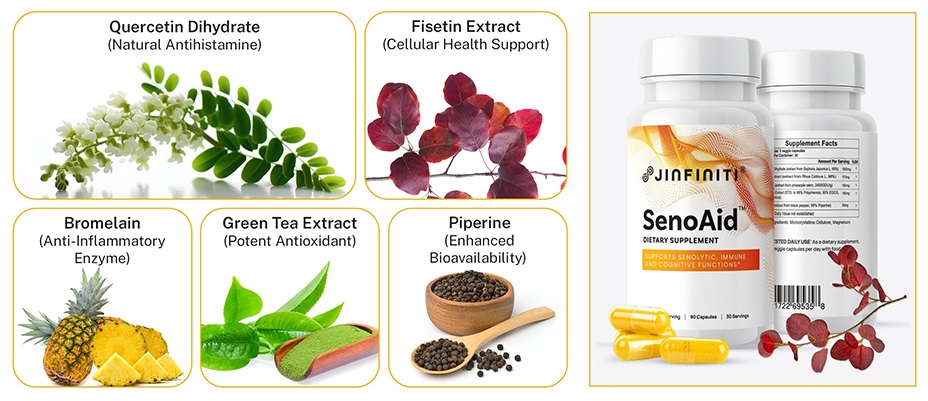
Quercetin And Fisetin: Two Senolytic Flavonoids Often Mentioned Together
Senolytics include a wide range of compounds studied in different models. In the supplement world, two of the most discussed natural candidates are quercetin and fisetin, both flavonoids found in plant foods and used in supplemental form.
Quercetin: The Versatile Flavonoid
Quercetin is found in foods like onions, apples, and berries. It is widely used for antioxidant support and inflammatory balance. In longevity discussions, quercetin is also frequently mentioned in relation to senescence biology and NAD+ preservation frameworks, including interest in its interaction with enzymes involved in NAD+ breakdown under certain conditions.
Fisetin: The Longevity Flavonoid With A Cleanup Reputation
Fisetin is found in foods such as strawberries, apples, onions, grapes, and persimmons. It has gained popularity in longevity circles because it is repeatedly studied as a senolytic candidate in preclinical models. People often think of fisetin as supporting cellular cleanup and healthier signaling environments over time.
Why They Are Often Paired
Quercetin and fisetin are often discussed together because they share overlapping themes, antioxidant support, inflammatory balance, and senescence-related research, while also having distinct research histories. In combined strategies, the idea is to support a broader range of senescence and stress-response pathways, creating a more favorable environment for NAD+ preservation and cellular resilience.
How A Senolytic Plus NAD+ Strategy Supports Brain Health Goals
It helps to think in terms of two lanes: energy supply and energy protection. NAD+ precursors are commonly used to support supply. Senolytic flavonoids are often used to support the cellular environment and reduce factors that increase NAD+ spending.
For brain health, this can matter in a few ways:
- Cleaner signaling: reduced senescence-associated inflammatory noise can support steadier neural communication.
- Better resilience: when cells have more NAD+ available, they may handle metabolic stress more effectively.
- Support for repair pathways: NAD+ is required for enzymes involved in cellular maintenance, and preserving it supports those systems.
Making It Measurable With NAD Testing
If NAD+ is part of your longevity plan, measurement can make the whole process feel more grounded. At-home NAD testing options allow many people to establish a baseline and then retest after following a consistent routine. Whether you are using a precursor, a senolytic flavonoid, or both, that before-and-after comparison can help you see whether your NAD-related marker is trending upward over time.
It is a simple loop: implement, measure, refine.