

Every programmer knows the rush of a good idea. You stare at a messy problem for hours, then suddenly the pieces snap together. The complicated design becomes a simple pattern, the bug turns into one small fix, or a tedious process becomes a tiny script.
Those moments can feel almost random, like lightning strikes you cannot control. In reality, insight and innovation usually come from repeatable conditions, not pure luck. The better you understand those conditions, the easier it becomes to create more of them on purpose.
You can support your ability to have good ideas with the way you work, how you rest, who you talk to, and how you treat your brain, including optional help from nootropics for focus and clarity. You do not need to force genius, you just need to feed the process that produces it.
Contents
What Insight Looks Like For Programmers
Insight for programmers is rarely a dramatic movie moment. It usually shows up in practical forms that quietly change how you work.
Simpler Models And Designs
One type of insight is seeing a simpler way to structure things:
- Replacing a tangle of conditionals with a clean state machine.
- Spotting a shared abstraction that removes repeated code.
- Redesigning a service boundary so each part has a clearer responsibility.
The requirements did not change, your mental model did.
New Combinations Of Existing Tools
Innovation is often about combining known pieces in new ways:
- Using a logging or tracing tool to answer a business question, not just a technical one.
- Reusing a feature flag system for safe migrations.
- Turning a one off script into a small internal product that saves everyone time.
You are not always inventing from scratch. You are rearranging what you already have.
Conditions That Quietly Fuel Insight
Good ideas rarely appear when your mind is overloaded and frantic. Certain conditions make insight more likely.
Focused Attention Without Constant Interruptions
Your brain needs stretches of steady attention to build a rich mental model. That is hard if you are checking chat every few minutes. Simple focus blocks help:
- Pick one meaningful problem.
- Work on only that for 40 to 60 minutes, with non essential notifications muted.
- Take a short break before starting the next block.
Insight often shows up in the second or third block, once your brain has enough context loaded.
Constraints That Are Tight, Not Impossible
Mild pressure and constraints can sharpen creativity. You might have:
- Limited compute or strict latency targets.
- A requirement to keep compatibility with an older system.
- A tight but realistic deadline.
These boundaries push you to search for better solutions. When constraints become impossible, though, they crush insight instead of fueling it.
Space For Your Subconscious To Work
Many “aha” moments arrive away from the screen, in the shower, on a walk, or while doing something unrelated. This is not magic. Once your conscious mind has wrestled with a problem, background processes keep working on it.
That only happens if you occasionally step away instead of hammering at the same function for five hours straight.
Habits That Make You More Innovative Over Time
Insight is easier when you feed your mind good material and give it habits that support curiosity instead of constant rush.
Collect Interesting Examples And Patterns
Innovative developers often keep a “scrapbook” of ideas:
- Short notes on clever patterns they see in other codebases.
- Screenshots or sketches of designs that feel elegant.
- Snippets of configs, migrations, or scripts that solved tricky problems.
When you face a new challenge, you have more raw material to recombine.
Ask Better Questions, Not Just For More Answers
Insight often begins with an unusual question:
- “What are we assuming that might not be true.”
- “If we had to ship a tiny version of this in one day, what would it look like.”
- “Is there a way to solve this one layer higher or lower in the stack.”
Make it a habit to write down one or two curious questions for each feature or bug, even if you still ship the straightforward solution this time.
Mix Inputs From Outside Your Stack
Many fresh ideas come from outside pure programming content. You might:
- Read about design, psychology, or systems thinking.
- Notice how other fields manage complexity or reliability.
- Talk with people in support, product, or operations about recurring problems.
These perspectives give your brain more shapes to use when it looks for new solutions.
Supporting Brain Health For Better Insight
Clear, flexible thinking depends on the state of your brain, not only your skills. Supporting that state makes insight more likely and less fragile.
Sleep, Fuel, And Movement As Innovation Tools
You do not need perfect habits, but a basic foundation matters:
- Sleep helps consolidate learning, which feeds future insight.
- Balanced meals support steady energy and fewer crashes.
- Movement such as walks or light exercise, helps mood and circulation.
- Hydration reduces headaches and low level fatigue that cloud thinking.
Innovation is hard to access when your brain is just trying to stay awake.
Nootropics As Optional Cognitive Support
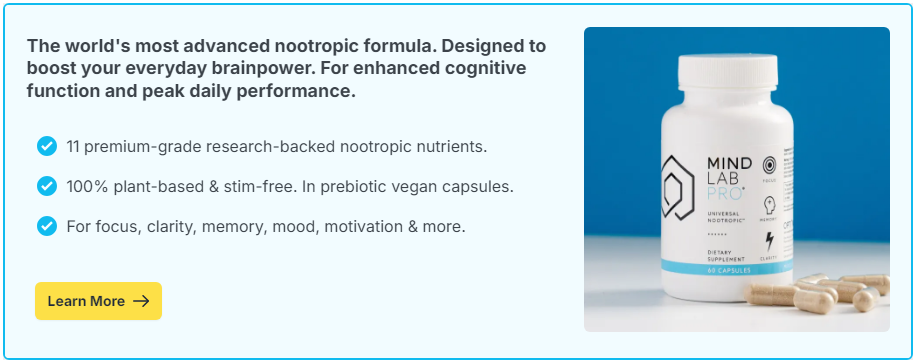
Some programmers look at nootropics as one way to support the mental state that favors insight. Nootropics is a broad term for substances and supplements used with the intention of supporting cognitive functions such as focus, memory, and mental clarity.
Common approaches include:
- Caffeine combined with L theanine, which many people use for smoother alertness.
- Nutrient based supplements that support overall brain health and energy metabolism.
- More complete nootropic formulas designed for everyday focus, memory, and clarity.
If you choose to experiment with nootropics, it helps to:
- Treat them as one layer on top of good sleep, habits, and realistic workloads.
- Pay attention to how your focus, mood, and sleep change over days and weeks.
- Be careful with timing so anything stimulating does not interfere with rest, which insight depends on.
Nootropics will not magically create ideas, but they can, for some people, help maintain the clarity and stamina that insight grows from.