
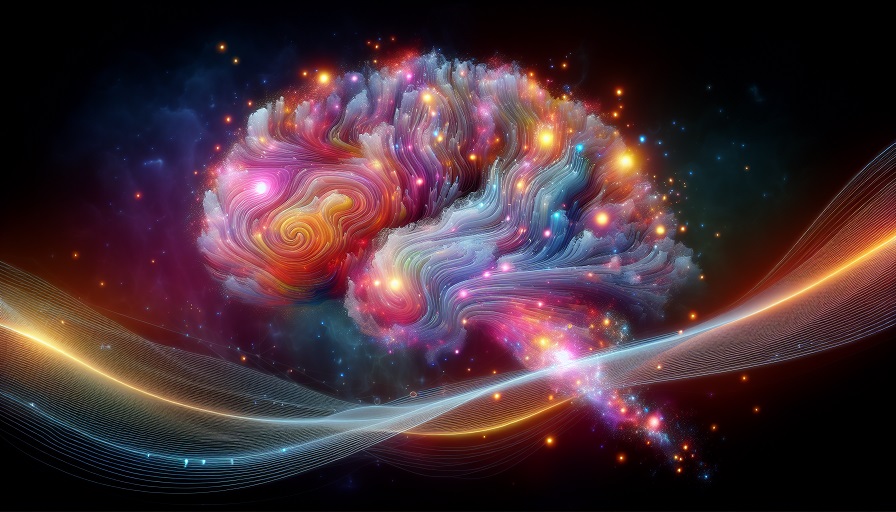
You fall asleep in your own bed and wake up remembering you just flew over a city made of glass, argued with a teacher from ten years ago, and drove a car that was also somehow your childhood home. None of it happened, yet it felt real enough to raise your heart rate.
Every night, your brain takes familiar pieces of your life, mixes them with old memories and raw sensation, and builds full worlds from the inside out. It can feel random, but underneath the chaos there is a nervous system doing important work with emotion, memory, and prediction.
Contents
What Your Brain Is Doing While You Dream
Dreaming happens mostly during REM sleep, a stage when your eyes move rapidly, your muscles are largely relaxed, and your brain activity looks surprisingly similar to wakefulness.
High Activity, Low Input
During REM sleep, many brain regions are buzzing with activity even though you are cut off from most outside signals. Sensory input is low, but internal networks are busy.
Visual areas light up, emotional centers stay highly involved, and parts of the frontal lobes that handle strict logic and impulse control quiet down. It is the perfect recipe for vivid images and emotional storylines that do not have to follow ordinary rules.
Memory Systems On Night Shift
While you sleep, the brain reviews and reorganizes recent experiences. Memories are replayed, strengthened, or gently filed in long term storage. Occasionally they are blended with older memories.
Dreams seem to be one way you experience that process from the inside. People, places, and events from different times mix together as the brain links them behind the scenes.
Why Dream Worlds Feel So Real
Dream scenes can feel oddly convincing. You may not question that your living room is on a boat or that a stranger is suddenly your best friend, at least not while the dream is happening.
The Prediction Machine Keeps Predicting
Your waking brain constantly predicts what should happen next and fills in gaps. During dreams, the same prediction systems are active, but they are working mainly with internal signals instead of external ones.
The brain receives fragments of memory, emotion, and random activity. It does what it always does: builds the most coherent story it can. That story turns into the world you experience in the dream.
Logic Steps Back, Emotion Steps Forward
Parts of the brain that help you catch contradictions are less active in REM sleep. At the same time, emotional areas stay busy. This lets feelings shape the dream more strongly than strict logic.
That is why many dreams make emotional sense even when they make no practical sense at all. They are built around fear, longing, shame, humor, or relief rather than realistic cause and effect.

Dreams And Emotional Processing
One of the most important jobs your brain does at night is emotional housekeeping. Dreams often play a role in that, especially when you are stressed.
Replaying Without The Full Impact
Difficult or important events often show up in dreams, sometimes in disguised form. Your brain may be revisiting the memory in a safer setting, adjusting how strongly it is tied to fear or shame.
Over time, repeated dreaming about a topic can soften the emotional charge. It is as if your nervous system is saying, “We need to keep this memory, but let us file it in a way that hurts less.” Nightmares are the uncomfortable end of that process, when the emotion is still intense.
Practicing For Possible Futures
Dreams do not only look backward. They also simulate what might happen. You may dream about exams, difficult conversations, or emergencies. These rehearsals are rarely accurate, but they let your brain test out reactions.
In this way, dreams can be seen as rough training grounds for the emotional system. They give you low cost experience with fear, risk, and problem solving, even while your body stays safely in bed.
Why Dreams Are So Weird
If dreams are doing useful work, why are they so strange? Part of the answer lies in how the brain blends information during sleep.
Mixing Old And New
Your brain does not store memories as tidy videos. It stores patterns, feelings, and fragments. During sleep, these pieces can recombine in unexpected ways.
Someone you met yesterday might blend with a family member, in a place you visited years ago, while you handle a task from last week. The dream feels bizarre, but each element may come from something real your brain is currently sorting.
Relaxed Rules Of Time And Space
Because strict logical control is lighter, the usual rules of time, identity, and space get flexible. You can jump from one scene to another with no transition, be in two roles at once, or watch yourself from outside.
This looseness can be unsettling. It can also allow creative combinations that would never appear in waking thought. Many artists and scientists have drawn on dream imagery or insights for their work.
How To Relate To Your Own Dream Worlds
You do not have to decode every symbol or treat dreams as hidden messages. Still, paying gentle attention to them can give you a different view of your inner life.
Notice Recurring Themes
If certain situations, feelings, or places show up again and again, they may reflect ongoing concerns. Common themes include being unprepared, trying to reach someone, or trying to protect something.
Instead of asking, “What does this symbol mean exactly?” you might ask, “What does this dream seem to be worried about or wanting for me?” Often the answer is simple: safety, connection, competence, or freedom.
Use A Light Touch With Interpretation
It is easy to over interpret, turning every odd detail into a dramatic prediction. A lighter approach is to treat dreams as one more source of information about your emotional landscape, not a strict script for your future.
If a dream stays with you, you can write it down, notice the feelings it stirred, and see whether those feelings match anything in your waking life that needs attention.
Support Better Sleep For Healthier Dreaming
Fragmented or very short sleep can disrupt normal dream patterns and make distressing dreams more likely. Caring for sleep hygiene supports not only daytime functioning but also how your brain does its night work.
Simple habits such as regular bedtimes, a wind down routine, and limiting stimulants close to bedtime can help your brain move through sleep stages more smoothly.
Key Ideas To Remember
Your brain invents full worlds at night because it stays active while your body rests. In that protected state, it processes memories, rehearses possible futures, and lets emotion run in looser patterns. The dreaming mind is not trying to trick you. It is trying to do maintenance on a life that is sometimes messy and intense.
You do not need to control your dreams for them to be useful. Simply respecting your need for sleep and being curious, rather than alarmed, about your inner night life can turn those strange worlds into quiet allies in understanding yourself.