
Performance Lab Immune and Host Defense MyCommunity take two very different roads to immune support. Performance Lab Immune is a precise, six-ingredient formula built around a postbiotic with published human trials, while Host Defense MyCommunity is a 17-species organic mushroom blend. Prices land in the same neighborhood, so the choice comes down to philosophy: pick Performance Lab Immune if you want specific, dosed ingredients with human research behind them, and pick MyCommunity if you prefer a whole-food, organic mushroom approach from a brand with a long track record.
Performance Lab Immune vs Host Defense MyCommunity at a Glance
| Feature | Performance Lab Immune | Host Defense MyCommunity |
|---|---|---|
| Core Approach | Postbiotic plus antioxidant and nutrient support | Multi-species mushroom mycelium blend |
| Key Ingredients | Immuse LC-Plasma (36 mg), Setria Glutathione (250 mg), liposomal vitamin D3 (25 mcg), vitamin C (30 mg), selenium (25 mcg), zinc (5 mg) | 17 mushroom species, 1,050 mg per serving (largest amounts: chaga, maitake, reishi, cordyceps) |
| Daily Dose | 1 capsule | 2 capsules |
| Capsules Per Bottle | 30 (30 days) | 60 (30 days) |
| Price (checked October 20, 2026) | $34.00 one-time, $25.50 per bottle on the four-bottle subscription | $30.72 per 60-capsule bottle at iHerb and Vitacost |
| Cost Per Day | $1.13 one-time, $0.85 on the four-bottle subscription | About $1.02 (60 capsules), about $0.90 (120 capsules) |
| Organic Certification | Not organic | Certified Organic by the WSDA, per retailer listings |
| Capsule | Pullulan (vegan) | Pullulan (vegan) |
Immune Support Ingredients: Six Targeted Nutrients vs. 17 Mushrooms
The labels almost read like opposites. Performance Lab Immune lists six ingredients with an exact dose for each. The star is Immuse LC-Plasma, a heat-killed form of Lactococcus lactis that supplies 100 billion cells per serving, according to Performance Lab. It sits alongside 250 mg of Setria Glutathione, an antioxidant the body makes naturally, plus liposomal vitamin D3, vitamin C, selenium, and zinc. Fair warning: the vitamin C (30 mg) and zinc (5 mg) amounts are modest, so they round out the formula rather than carry it.
Host Defense MyCommunity goes broad instead of precise. Two capsules deliver 1,050 mg of mycelium from 17 mushroom species, including chaga (148 mg), maitake (142 mg), reishi (110 mg), cordyceps (100 mg), lion’s mane (64 mg), turkey tail (48 mg), and shiitake (20 mg). Each species gets a small slice, and the label lists them as “mycelium/rice biomass,” which means the rice the mycelium grew on is part of the powder you swallow.
How Each Formula Supports Your Immune System
Performance Lab Immune works through a specific pathway. Immuse LC-Plasma is studied for its ability to activate plasmacytoid dendritic cells, which act like scouts that alert other immune cells. Performance Lab says the full formula supports five immune cell types, and the vitamin D3, selenium, zinc, and vitamin C supply nutrients your immune system uses every day.
Host Defense MyCommunity leans on the long tradition of medicinal mushrooms. The brand describes it as a blend that supports the immune system’s natural ability to communicate and react, and it says the formula encourages a balanced immune response. Think of it as a wide net rather than a single target.
Research Behind the Key Immune Ingredients
Here is where the two products separate most clearly. For Performance Lab Immune, the headline ingredient has human trials you can read. One randomized, placebo-controlled trial followed 51 male university athletes taking 100 billion heat-killed LC-Plasma cells daily for 13 days. The LC-Plasma group logged fewer cumulative days of upper respiratory symptoms (39 days vs. 56 days for placebo) and fewer days of fatigue. Another randomized trial on PubMed tested the same bacterial strain and looked at influenza-like illness and the interferon response during winter. Performance Lab says Immuse has been studied in 7 efficacy trials and 2 safety trials.
For MyCommunity, the research the brand points to is an in vitro study on human immune cells, which means it was done in the lab rather than in people. That work can show a blend interacts with immune cells, but it cannot tell you what happens when someone takes the capsules every day. We did not find published human trials of the MyCommunity blend itself.
The mushroom world also has an ongoing debate about format. Some mushroom supplement makers argue that fruiting body extracts contain far more beta-glucans (reported at 30 to 40%) than mycelium grown on grain (often under 7%), because the grain adds starch. That argument comes largely from companies that sell fruiting body products, and Host Defense has its own view on the value of mycelium, so treat it as a debate rather than a verdict. It is still worth knowing before you buy.
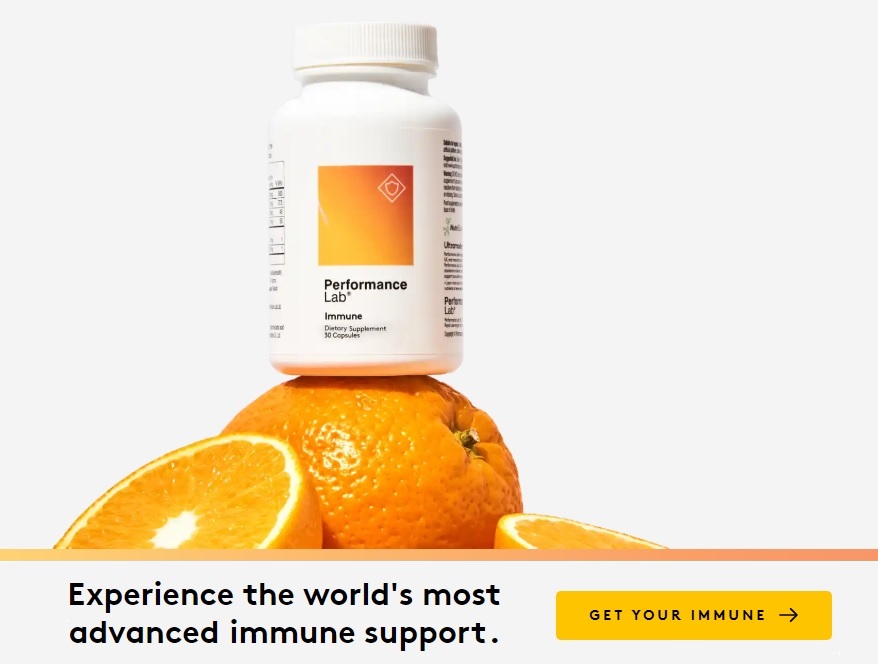
Price Per Day and Value Compared
Prices below were checked on October 20, 2026. Performance Lab prices come from its own website. For Host Defense, We used the prices on iHerb and Vitacost, because the brand’s own site showed only “from $20.95” with the bottle size unclear. Check Host Defense’s current checkout page too.
- Host Defense MyCommunity, 60 capsules (30 servings): $30.72, or about $1.02 per day.
- Host Defense MyCommunity, 120 capsules (60 servings): $53.97, or about $0.90 per day.
- Performance Lab Immune, one-time purchase: $34.00, or about $1.13 per day.
- Performance Lab Immune, monthly subscription: $30.60, or about $1.02 per day.
- Performance Lab Immune, four-bottle subscription: $102.00 every four months, or about $0.85 per day.
In plain terms: a one-time Performance Lab purchase costs a few dollars more per month than a 60-capsule MyCommunity bottle. On the monthly subscription the two are tied, and on the four-bottle plan Performance Lab is about 17% cheaper per day than the 60-capsule MyCommunity bottle. Over twelve months that is roughly $306 vs. $369, a difference of about $60. Against the 120-capsule MyCommunity bottle the gap shrinks to around $18 a year. Price is not the deciding factor here.
Quality, Organic Certification, and Brand Reputation
Founded by mycologist Paul Stamets, Host Defense markets itself as the best-selling mushroom brand in the U.S., and retailer listings show MyCommunity as Certified Organic by the WSDA, non-GMO, gluten free, and vegan. The brand also says its capsules are verified for quality and safety.
Performance Lab states that Immune is made to Clean Label standards and third-party tested for purity and potency. It is free of gluten, soy, dairy, synthetic additives, and caffeine, and it shows every ingredient dose with no proprietary blends. That level of dose transparency is the main contrast with a 17-species blend where each mushroom appears in small amounts.
Who Should Choose Performance Lab Immune
Performance Lab Immune is a strong fit if you want:
- Specific ingredients with published human trials behind them.
- Vitamin D3, selenium, zinc, and vitamin C in the same capsule.
- A one-capsule daily routine instead of two.
- The lowest cost per day, which comes from the four-bottle subscription.
If that sounds like you, take a look at Performance Lab Immune and compare the purchase options.
Who Should Choose Host Defense MyCommunity
Host Defense MyCommunity makes sense if you:
- Prefer a whole-food, organic mushroom approach over isolated ingredients.
- Value organic certification and a long-established mushroom brand.
- Want exposure to many species, including chaga, reishi, turkey tail, and cordyceps, in one product.
- Do not mind taking two capsules a day.
Can You Take Both Together?
The two formulas do not share ingredients, so on paper they complement each other: one targets specific immune pathways with measured doses, the other offers broad mushroom support. Still, it is wise to ask your doctor or pharmacist before combining supplements, especially if you take medication or have an autoimmune condition.
Frequently Asked Questions
Is Performance Lab Immune better than Host Defense MyCommunity?
It depends on what you value. Performance Lab Immune offers specific, fully dosed ingredients, including one with published human trials, plus vitamins and minerals in a single daily capsule. Host Defense MyCommunity offers a broad organic mushroom blend from a well-known brand. Evidence-focused shoppers will likely prefer Performance Lab, while whole-food shoppers may prefer Host Defense.
Which costs less per day?
As of November, 2026, Host Defense MyCommunity costs about $1.02 per day for the 60-capsule bottle and about $0.90 for the 120-capsule bottle at iHerb and Vitacost. Performance Lab Immune costs about $1.13 per day one-time, $1.02 on monthly subscription, and $0.85 on the four-bottle subscription.
What is the difference between mushroom mycelium and fruiting body supplements?
The fruiting body is the part of a mushroom you see above ground, while mycelium is the root-like network beneath it. Host Defense grows mycelium on organic brown rice, so its label lists “mycelium/rice biomass.” Some makers argue fruiting body extracts contain more beta-glucans, a debate that continues among supplement brands.
Does Host Defense MyCommunity have human clinical trials?
The research Host Defense highlights for MyCommunity is an in vitro study using human immune cells, meaning it was done in a lab. We did not find published human trials of the MyCommunity blend itself. Performance Lab says its Immuse ingredient has been studied in human trials, including a placebo-controlled study in athletes.
Final Verdict on Performance Lab Immune vs Host Defense MyCommunity
This is a closer contest than most. If you want ingredients you can trace to human research, exact doses, and vitamins and minerals in one capsule a day, Performance Lab Immune is the stronger choice. If you would rather take a whole-food organic mushroom blend from an established brand, Host Defense MyCommunity is a reasonable pick that costs about the same. Either way, treat the capsule as one piece of the puzzle alongside sleep, movement, and a varied diet. You can see current pricing and subscription options for Performance Lab Immune here.
These statements have not been evaluated by the Food and Drug Administration. These products are not intended to diagnose, treat, cure, or prevent any disease. Talk with your doctor before starting a new supplement, especially if you are pregnant, nursing, taking medication, or managing a health condition. Prices and formulas were checked on October 20, 2026, and may change.