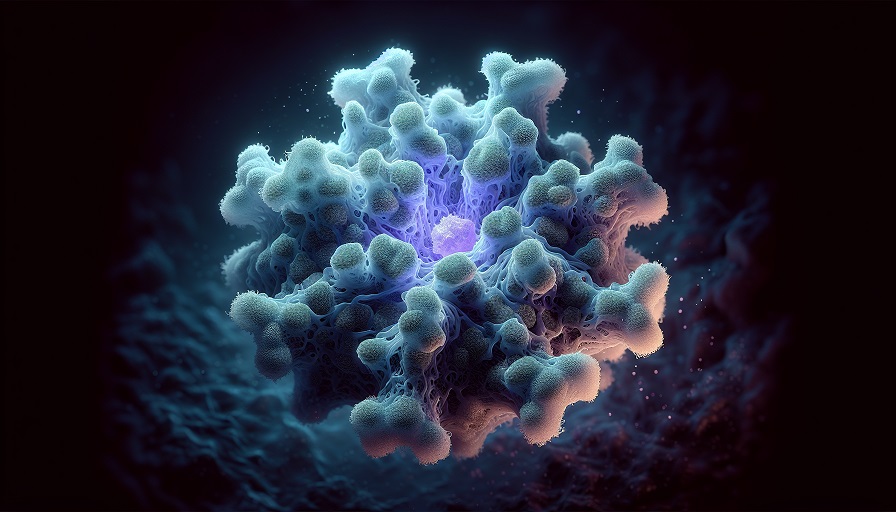
If natural killer cells are your immune system’s rapid-response strike team, killer T-cells are the precision special forces. They take a little longer to deploy, they require specific intelligence before they act, and they are ruthlessly selective in their targets. But when they arrive on the scene, they are extraordinarily effective at what they do: finding and destroying cells that have been hijacked by viruses, turned cancerous, or otherwise compromised.
Killer T-cells, also known as cytotoxic T lymphocytes or CD8+ T-cells, represent one of the most sophisticated components of the human immune system. Understanding how they work, and why supporting them matters, offers a window into just how elegantly your body defends itself when everything is functioning well.
Where Killer T-Cells Come From
Like most immune cells, killer T-cells originate in the bone marrow from stem cells. From there, they migrate to the thymus, a small gland located just behind the breastbone. The name “T-cell” actually comes from the thymus, where these cells undergo a rigorous training and selection process that would make any military boot camp look casual by comparison.
In the thymus, developing T-cells are tested for their ability to recognize the body’s own cells as “self” and distinguish them from foreign invaders. Cells that cannot make this distinction accurately are eliminated. Those that pass the test are released into the bloodstream as mature, functional T-cells, ready to serve their designated role in immune defense.
The Difference Between Killer T-Cells and Helper T-Cells
T-cells come in several varieties, and two of the most important are killer T-cells and helper T-cells. While they share a common origin and training ground, they have very different jobs. Helper T-cells act as coordinators, directing other immune cells and amplifying the immune response. Killer T-cells, by contrast, are the executioners. Their primary job is to identify and directly destroy compromised cells.
Killer T-cells carry a surface protein called CD8, which is why they are often labeled CD8+ T-cells in scientific literature. Helper T-cells carry CD4. This molecular difference reflects a fundamental difference in function, and both are essential to a well-rounded immune response.
How Killer T-Cells Find Their Targets
Here is where killer T-cells earn their reputation for precision. They do not attack cells indiscriminately. Instead, they rely on a system of molecular identification that is genuinely remarkable in its sophistication.
Every cell in your body displays fragments of its internal proteins on its surface via structures called MHC class I molecules, essentially molecular bulletin boards that announce what is happening inside the cell. Under normal circumstances, these displayed fragments are from normal cellular proteins. But when a cell is infected by a virus, viral protein fragments appear on those bulletin boards. When a cell becomes cancerous, abnormal protein fragments show up instead.
Killer T-cells patrol the body, scanning these bulletin boards constantly. Each killer T-cell carries a unique receptor that is designed to recognize one specific type of protein fragment. When it finds the fragment it has been programmed to recognize, it locks on, and the attack begins.

The Attack Mechanism
Once a killer T-cell has identified its target, the process of destruction is precise and deliberate. The T-cell attaches to the compromised cell and releases perforins, proteins that create pores in the target cell’s outer membrane. Through these pores, it delivers granzymes, which trigger apoptosis, the controlled self-destruction of the infected or abnormal cell. The cellular contents are contained, the threat is neutralized, and the T-cell moves on.
Killer T-cells can also signal target cells to destroy themselves through a separate mechanism involving proteins called Fas ligands, which bind to receptors on the target cell and initiate the same apoptosis pathway. This gives them two independent tools for elimination, which speaks to how important this function is to the body’s survival.
Killer T-Cells and Immunological Memory
One of the most remarkable aspects of killer T-cells is what happens after the battle is won. When a threat has been eliminated, most of the killer T-cells that were recruited for that specific fight undergo a process of contraction, where their numbers reduce back to a baseline level. But a subset of them become memory T-cells, long-lived cells that remain in the body and retain the ability to recognize that specific threat.
If the same pathogen appears again, these memory cells can mount a much faster and stronger response than the first time around. This is the fundamental principle behind how vaccines work: they introduce the immune system to a harmless version of a pathogen, triggering T-cell activation and the formation of memory cells, so that if the real pathogen ever arrives, the response is swift and powerful.
Long-Term Immune Fitness
This memory function is also why supporting your immune system is not just a short-term concern. Healthy killer T-cell populations and robust memory T-cell reserves are part of what makes an immune system truly resilient over time. Age, chronic illness, nutritional deficiencies, and prolonged stress can all erode the quality and quantity of your T-cell reserves, with real consequences for long-term immune fitness.
What Affects Killer T-Cell Performance?
Several factors have meaningful impacts on killer T-cell function. Vitamin D is particularly well studied here, with research showing that T-cells actually have receptors for vitamin D and depend on adequate levels to activate and proliferate properly. A vitamin D-deficient immune system may struggle to mount a full killer T-cell response even when the command to activate has been given.
Zinc deficiency is another significant concern. Zinc plays roles in T-cell development in the thymus, T-cell receptor signaling, and the regulation of T-cell activity. Without adequate zinc, the entire T-cell arm of the immune response can be compromised from the ground up.
Glutathione, the body’s master antioxidant, also supports T-cell populations. Research suggests it plays a role in T-cell proliferation and function, as well as in protecting these cells from oxidative damage during an active immune response. Since killer T-cells generate significant oxidative stress while doing their work, antioxidant support is not optional; it is essential to sustained effectiveness.
Supporting the Hunters
Killer T-cells are one of your most powerful immune assets. They combine extraordinary specificity with lethal efficiency, and their ability to form lasting memories means that every infection they resolve makes your immune system a little smarter. Giving them the nutritional and lifestyle support they need, through adequate sleep, appropriate exercise, and key micronutrients, is one of the most meaningful investments you can make in your long-term health.