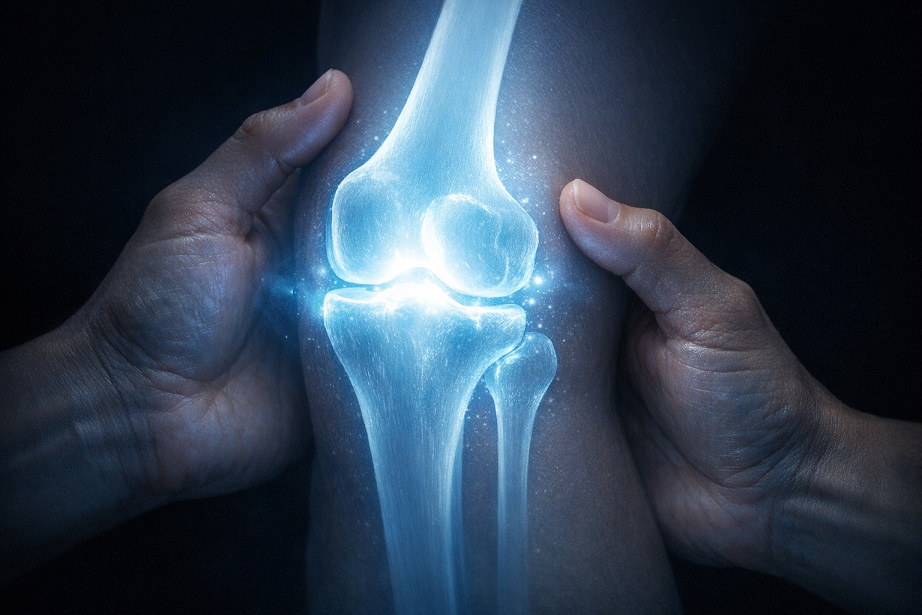
There’s a moment that comes for most of us sometime in our forties, or maybe our late thirties if we’ve been hard on our bodies, when we stand up from the couch and hear something pop. Or we take those first morning steps and notice our knees are less than enthusiastic about the idea. It can feel like a betrayal, as if the body you’ve relied on your whole life has quietly started renegotiating the terms of the agreement. But what’s actually going on inside those joints, and is there anything meaningful you can do about it?
The Biology of Joint Aging
Joints are engineering marvels. A healthy joint is a precisely calibrated system of bone, cartilage, synovial fluid, ligaments, tendons, and a surrounding joint capsule, all working together to allow smooth, pain-free movement while absorbing the mechanical forces of everyday life. For most of our younger years, this system maintains itself remarkably well. Then, gradually, things change.
Cartilage: The First Casualty
Cartilage is the rubbery, shock-absorbing tissue that covers the ends of bones at every joint. It has no blood supply of its own, which means it relies on the mechanical pumping action of joint movement to distribute nutrients and oxygen via synovial fluid. Cartilage is alive, populated by cells called chondrocytes that are constantly, though slowly, renewing the tissue’s structural matrix.
The problem is that with age, chondrocytes become less productive. They repair cartilage more slowly than before, while the rate at which the matrix naturally degrades stays the same or increases. Over time, this imbalance leads to thinner, less elastic cartilage that is more vulnerable to damage. The once-smooth surface becomes rougher, and the cushioning that once seemed inexhaustible starts to thin. This progressive loss of cartilage quality and volume is the hallmark of osteoarthritis, the most common joint condition in adults over fifty.
Synovial Fluid and the Lubrication Problem
Another change that comes with age is a decline in the quality and quantity of synovial fluid, the viscous liquid that lubricates joint surfaces and delivers nutrients to cartilage. A key component of healthy synovial fluid is hyaluronic acid, a large molecule that gives the fluid its thick, gel-like consistency. As we age, hyaluronic acid molecules become shorter and less effective, and the overall production of synovial fluid tends to decrease. The result is joints that feel stiffer and less fluid in their movement, particularly first thing in the morning or after prolonged sitting.
Inflammation Becomes a Bigger Player
Aging is also associated with a phenomenon researchers have nicknamed “inflammaging,” a state of chronic, low-grade systemic inflammation that persists in older adults even in the absence of acute infection or injury. This background inflammation is not dramatic, but over years and decades it has meaningful consequences for joint tissue. Inflammatory molecules like interleukin-1 and TNF-alpha accelerate cartilage breakdown, inhibit the repair activities of chondrocytes, and sensitize pain receptors in and around joints, making them more reactive to mechanical stress. This is why joints that might have shrugged off a day of hiking in your twenties are more likely to protest for days afterward in your fifties.
Why Tendons and Ligaments Change Too
Joints are more than just cartilage and fluid. The tendons that attach muscles to bones and the ligaments that connect bones to each other are made primarily of collagen, a structural protein that changes significantly with age. Collagen fibers become less organized, more brittle, and slower to repair after microdamage. This means tendons and ligaments lose some of their tensile strength and elasticity, making them more susceptible to injury and contributing to overall joint instability.
The change in collagen also affects the sense of proprioception, the body’s awareness of joint position in space. With age, the sensory nerve endings embedded in joint tissues become less acute, which is part of why older adults may notice their balance and coordination aren’t quite as sharp. It’s a subtle effect, but one with real implications for joint safety and injury prevention.

Muscle Loss Makes It Worse
Starting around age thirty, and accelerating after fifty, most adults gradually lose muscle mass in a process called sarcopenia. Muscles are not just for movement; they’re also the primary shock absorbers and stabilizers for joints. Strong quadriceps muscles, for example, dramatically reduce the mechanical load transmitted through the knee joint during walking and stair climbing. As muscles weaken with age, more of that mechanical stress is transferred directly to cartilage and bone, accelerating the very wear and tear that causes joint pain.
What You Can Actually Do About It
Here’s the good news: while you can’t stop the calendar, there is genuine evidence that a combination of lifestyle habits and targeted nutritional support can meaningfully slow the progression of age-related joint changes and keep you more comfortable and mobile for longer.
Keep Moving, but Move Wisely
Physical inactivity is one of the worst things you can do for aging joints, counterintuitive as that might sound when movement hurts. Cartilage depends on movement for its nutrient supply, and the muscles that protect joints only stay strong through use. Low-impact activities like swimming, cycling, walking, and resistance training maintain muscle mass, support joint lubrication, and keep cartilage healthier than sedentary living does. The key is choosing movement patterns that load joints appropriately without excessive impact or repetitive stress.
Manage Your Weight
Every extra pound of body weight adds roughly three to four pounds of force on the knee joint with each step. For the hip, the multiplier is even higher. Reducing excess weight is one of the most mechanically direct ways to reduce joint stress, and studies consistently show that even modest weight loss leads to meaningful improvements in joint pain and function.
Nutritional Support for Joint Tissue
Targeted nutrition can address several of the specific biological changes that make aging joints more vulnerable. Anti-inflammatory ingredients like curcumin from turmeric and boswellic acids from boswellia resin can help moderate the background inflammatory environment that accelerates cartilage breakdown. Glucosamine sulfate and other glycosaminoglycan precursors provide raw materials for cartilage matrix maintenance. MSM (methylsulfonylmethane) supplies sulfur, a mineral critical for collagen synthesis and connective tissue integrity.
These aren’t magic bullets, but they’re evidence-backed tools that work best when used consistently over time, like compound interest for your joints.
Prioritize Recovery and Sleep
Most of the repair activity in joint tissue happens during rest, particularly deep sleep. Growth hormone, which plays a key role in tissue repair, is predominantly released during sleep. Chronic sleep deprivation impairs the body’s ability to maintain and repair connective tissue, while also elevating systemic inflammation. Good sleep hygiene is, in the most literal sense, part of a joint health strategy.
Getting Ahead of It
Perhaps the most important shift in mindset is recognizing that joint health is not a problem you solve after it becomes severe; it’s something you invest in across decades. The changes that cause an aching hip at sixty began quietly and gradually years earlier. That means the best time to start supporting your joints is not when they hurt, but before they do. The biology of joint aging is not entirely reversible, but it is significantly modifiable, and that is a genuinely encouraging fact worth remembering the next time your knees sound off on the stairs.