
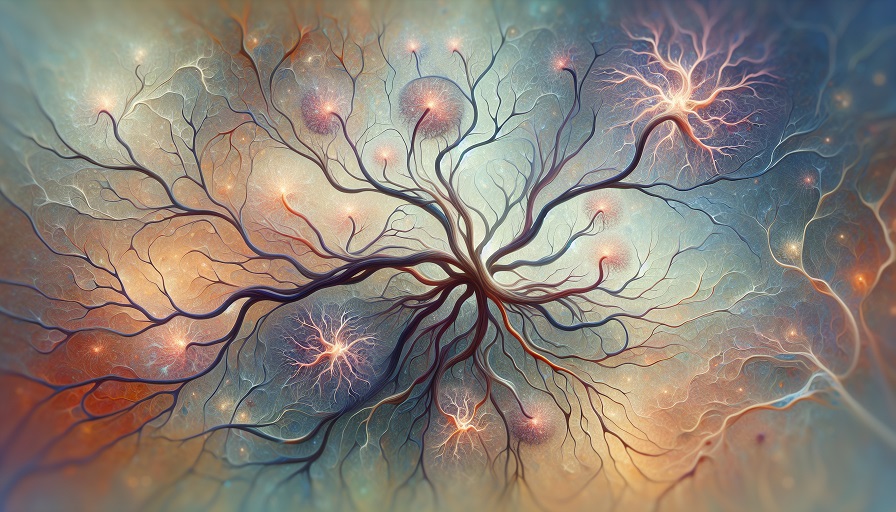
When you hear the phrase “neural network,” it sounds like a direct copy of the brain, as if engineers simply traced neurons onto a circuit board and called it a day. The truth is more complicated. Artificial neural networks are rough sketches inspired by the brain, not detailed blueprints. Yet the similarities they do share are interesting, and sometimes surprising, especially if you care about how thinking really works.
Looking at both side by side helps with two goals at once. It makes modern AI feel less magical and more understandable, and it can deepen your appreciation of the living networks inside your own head. After all, when you read about a neural net learning to recognize images, you are watching a faint echo of what your own neurons do constantly.
Contents
What Is A Neuron, Really?
To see the similarities, it helps to start with the original model. A biological neuron is a specialized cell that receives, processes, and sends signals. Your brain contains billions of them, forming connections in a dense web that supports every thought, memory, and movement.
Inputs, Processing, And Outputs
Each neuron has branches that receive signals from other neurons. These tiny electrical and chemical messages flow into the cell body, where they are combined. If the combined input is strong enough, the neuron responds by sending its own signal down a long fiber to other cells. This basic recipe repeats endlessly: receive, integrate, fire.
The strength of connections between neurons can change over time. This flexibility, often called plasticity, lets the brain learn. Repeated signals can strengthen certain pathways, making it easier for those patterns to fire in the future. Less used connections may weaken. Your experiences literally reshape your brain’s wiring.
Networks, Not Lone Cells
A single neuron is not very impressive on its own. The magic appears when you have millions of them linked together. Groups of neurons form circuits that detect edges in your visual field, understand language, or help you remember a song. Higher functions of the mind come from patterns spread across many cells, not from isolated spots.
What Is An Artificial Neural Network?
Now picture the version that lives in computer code. An artificial neural network is a mathematical structure made of simple units called artificial neurons or nodes. These units are not living cells, they are tiny calculators that take in numbers, perform a simple operation, and send out a result.
Layers Of Simple Units
In a typical neural network, nodes are arranged in layers. The first layer receives input data, such as pixel values for an image. Hidden layers in the middle transform those numbers step by step. The final layer produces an output, such as a prediction about what the image contains.
Each connection between nodes carries a weight, a number that scales the signal. During training, the network adjusts these weights so that its predictions become more accurate. Over time, the pattern of weights encodes what the system has learned about the relationships in the data.
Learning From Examples
Neural networks do not learn like a human student reading a textbook. They learn by seeing many examples. A model might see thousands or millions of labeled images, gradually updating its weights to reduce mistakes. Eventually, it becomes able to recognize patterns it has never seen before.
This process, while mechanical, has a familiar flavor. The system improves through experience, making internal changes based on feedback. That is one of the main reasons the brain inspired this approach.
Key Similarities Between Neural Nets And Neurons
On the surface, one system is wet and biological, the other is dry and digital. Still, several core ideas link them together. These shared themes are part of what makes the term “neural network” more than just a marketing phrase.
1. Simple Units Combine To Create Complex Behavior
Neurons and artificial nodes are individually simple. A neuron fires or stays quiet. A node outputs a number based on its inputs. Complexity arises not from one element, but from how huge numbers of them interact.
In your brain, this leads to rich mental life. In AI models, it leads to skills like translation, speech recognition, and image classification. In both cases, there is no single “intelligence cell” that does everything. Intelligence is a property of the network as a whole.
2. Weighted Connections Shape Learning
In biology, some synapses, the connections between neurons, are stronger than others. A strong connection has a big influence on whether the receiving neuron fires. Learning often involves adjusting these strengths.
In artificial networks, weights play a similar role. A large weight means a particular input has a strong effect on a node’s output. Training adjusts these weights, somewhat like experience adjusting synaptic strength. The analogy is not perfect, but the idea of learning through changing connection strength is shared.
3. Nonlinear Responses Enable Rich Patterns
Neurons do not respond in a simple straight line. A weak input might cause no response. A stronger one might suddenly trigger a full electrical spike. This kind of response is called nonlinear, and it lets networks represent complicated patterns.
Artificial neurons also use nonlinear functions. Instead of firing an electrical spike, they might apply a mathematical function that bends the relationship between input and output. Without this, neural networks would be far less powerful.
4. Learning Emerges From Repeated Experience
Your brain does not instantly master a new skill. It improves with repetition, whether you are learning a language or practicing a musical instrument. Synaptic changes accumulate slowly.
Neural nets also improve through repeated exposure to training data. Each pass through the data updates the weights slightly. Over many rounds, the model becomes more accurate. Both systems learn gradually rather than flipping from ignorant to expert in one step.
What These Similarities Mean For Brain Health
Thinking about neural nets and neurons together can shift how you think about your own brain. You begin to see your mind as a dynamic network that can be trained, supported, and shaped, not a fixed set of abilities you are stuck with forever.
Your Brain As A Trainable Network
Just as engineers improve a neural network by feeding it good training data, you can improve your brain’s performance by choosing your mental “inputs” wisely. Challenging learning, rich conversations, and thoughtful reading all act like training data for your neurons.
Repetition and consistency help. The same way a neural net slowly tunes its weights, your brain gradually strengthens circuits for skills you practice. Language, memory, reasoning, and focus all respond to this kind of repeated engagement.
Supporting The Hardware
A neural network can run on any suitable computer. If you upgrade the hardware, the model usually runs faster. For your brain, the “hardware” is biology. Sleep, exercise, nutrition, and stress management all affect how well neurons fire, connect, and repair themselves.
When you care for your body, you are indirectly caring for the networks that support your attention, learning, and creativity. Brain support strategies, including some nootropic approaches, aim to keep this living hardware in good working order so that your internal “model” can keep learning.
Using AI To Learn About The Brain, And Vice Versa
The relationship between neural nets and neurons is not one way. AI research and neuroscience have started to feed each other new ideas. As models grow more complex, brain researchers use them as testbeds for theories. As neuroscience uncovers new principles, AI engineers borrow concepts to build better systems.
Models As Testable Hypotheses
Some scientists treat neural networks as simplified models of brain circuits. If a particular kind of network replicates a feature of human perception, that can support certain ideas about how real neurons might be organized. The model is not proof, but it serves as a testable hypothesis.
At the same time, when a neural net fails in a way humans do not, that difference can highlight what is unique about biological thinking. For example, models may be easily fooled by tiny changes in an image that humans barely notice.
Inspiration For Better Tools
Neuroscience has inspired attention mechanisms, memory modules, and other architectural ideas in AI. In return, AI tools help analyze brain data, revealing patterns in recordings that would be hard to spot by eye. The two fields form a kind of feedback loop.
For someone interested in brain health, this is encouraging. The more we learn about how neurons and artificial networks process information, the better we can design training, therapies, and tools that support human cognition throughout life.
In the end, neural nets are not digital brains, but they are close enough cousins to make the comparison useful. Both rely on large webs of simple units, both learn from repeated experience, and both can surprise their creators. The important difference is that your brain is alive, adaptable, and deeply connected to your sense of self. Caring for that living network is still one of the smartest long term investments you can make.