

If you ask most people to name a nutrient that’s good for their eyes, you’ll probably get “vitamin A” or maybe “carrots.” Fair enough. But quietly working away behind the scenes is a compound that arguably does more for your long-term vision than either of those, and most people have never given it a second thought. That compound is lutein, and it’s high time it got the recognition it deserves.
Lutein belongs to a family of pigments called carotenoids, the same broad group responsible for the orange in carrots and the red in tomatoes. But lutein’s job is a little more specific, and a lot more personal. It heads straight for your eyes, parks itself in the macula (the central part of your retina), and gets to work protecting your vision from the kind of damage that builds up quietly over a lifetime. Think of it as a natural filter, one your eyes absolutely need but can’t make on their own.
What Lutein Actually Does in Your Eyes
Understanding what lutein does requires a quick stop at the macula. This small but mighty region of the retina is responsible for your central vision, the sharp, detailed sight you use for reading, recognizing faces, and driving. When the macula is healthy, vision is clear. When it isn’t, things get blurry in ways that are difficult to reverse.
Building the Macular Pigment
Lutein is one of only two nutrients (the other being zeaxanthin, its close cousin) that the body deposits directly into the macula to form what’s called the macular pigment. This yellow-orange layer acts like a pair of internal sunglasses, absorbing high-energy blue light before it can damage the photoreceptors underneath. Researchers measure the density of this layer using a metric called Macular Pigment Ocular Density, or MPOD, and higher MPOD is consistently linked with better visual performance and a lower risk of age-related macular concerns.
Studies have shown that supplementing with lutein can boost MPOD by as much as 36% in individuals with macular health concerns. That’s not a trivial improvement. It’s the nutritional equivalent of upgrading your eye’s built-in sun protection from SPF 10 to SPF 46.
Protecting Photoreceptors from Light Damage
Every time your eyes are exposed to light, especially the blue-violet end of the spectrum emitted by the sun, LED screens, and fluorescent bulbs, free radicals form in the retinal tissue. Left unchecked, these unstable molecules damage the delicate photoreceptor cells responsible for converting light into the signals your brain reads as vision.
Lutein is one of the primary antioxidants on the front line of this battle. It neutralizes free radicals in the retina and lens, slowing the kind of oxidative wear that accumulates over years of daily exposure. This is particularly relevant in an era when most of us spend eight or more hours a day staring at screens, each one pumping blue light directly into our eyes.
Lutein and Visual Performance
Beyond protection, lutein also plays an active role in how well you see right now, not just decades down the road.
Visual Acuity and Contrast Sensitivity
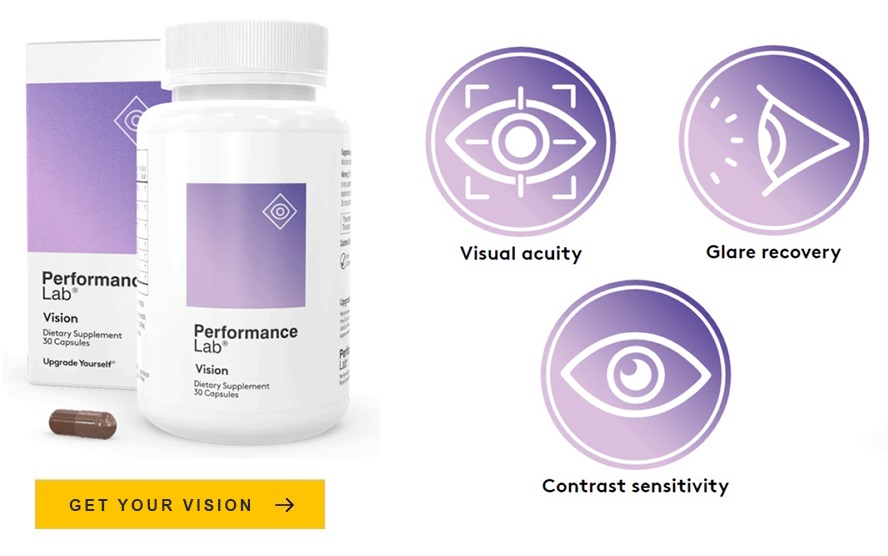
By nourishing the macular pigment, lutein supports the kind of sharp, high-resolution central vision that lets you read small print, spot a face across a room, or track a ball in flight. Research has also linked adequate lutein levels with better contrast sensitivity, the ability to distinguish objects from backgrounds when lighting conditions are tricky, such as fog, low light, or glare-heavy environments.
Athletes, drivers, and anyone who works in variable lighting conditions have real, practical reasons to pay attention to this. Contrast sensitivity is often what separates a confident driver on a foggy night from one who’s squinting and second-guessing every turn.
Glare Recovery
Another area where lutein earns its keep is glare recovery, the speed at which your vision returns to normal after a sudden flash of bright light. Whether it’s headlights on a dark road or a camera flash in a dim room, the time your eyes take to readjust is influenced by the health of your macula. A well-nourished macular pigment, reinforced by adequate lutein, helps that recovery happen faster.
Where Lutein Comes From
Your body cannot synthesize lutein, which means diet is the only delivery vehicle. Dark leafy greens are the richest sources: kale and spinach top the charts, followed by Swiss chard, collard greens, and romaine lettuce. Egg yolks, despite being a less concentrated source, offer lutein in a highly bioavailable form because the fat content in the yolk improves absorption.
Here’s the catch. Studies consistently show that most people consume far less lutein than the amounts associated with meaningful benefits. Research suggests the sweet spot for eye health support falls somewhere between 6 and 20 milligrams per day, while the average dietary intake in Western countries hovers around 1 to 2 milligrams. That’s a gap worth thinking about.
Supplementing with Lutein
For people who want to ensure they’re hitting meaningful levels, supplemental lutein offers a reliable path. Most high-quality eye health supplements source their lutein from marigold flower extract, which provides a concentrated, consistent dose. Crucially, lutein should be taken with a meal containing some fat to maximize absorption, since it’s a fat-soluble nutrient. Take it with a dry cracker and it’s largely wasted; take it with food containing healthy fats and absorption improves significantly.
It’s also worth noting that lutein doesn’t work in isolation. Research consistently shows it performs better alongside zeaxanthin, with which it shares a naturally complementary relationship in the macula. Some of the most robust evidence for lutein’s benefits comes from studies examining the two together.
A Nutrient Worth Knowing
Lutein rarely gets top billing in conversations about health and nutrition, and that’s a shame. It’s backed by over 80 human clinical trials, it does something genuinely important for one of your most irreplaceable sensory organs, and it’s available in food and supplement form without drama or complexity. Your eyes are quietly relying on it every single day. The least you can do is make sure they have enough of it.