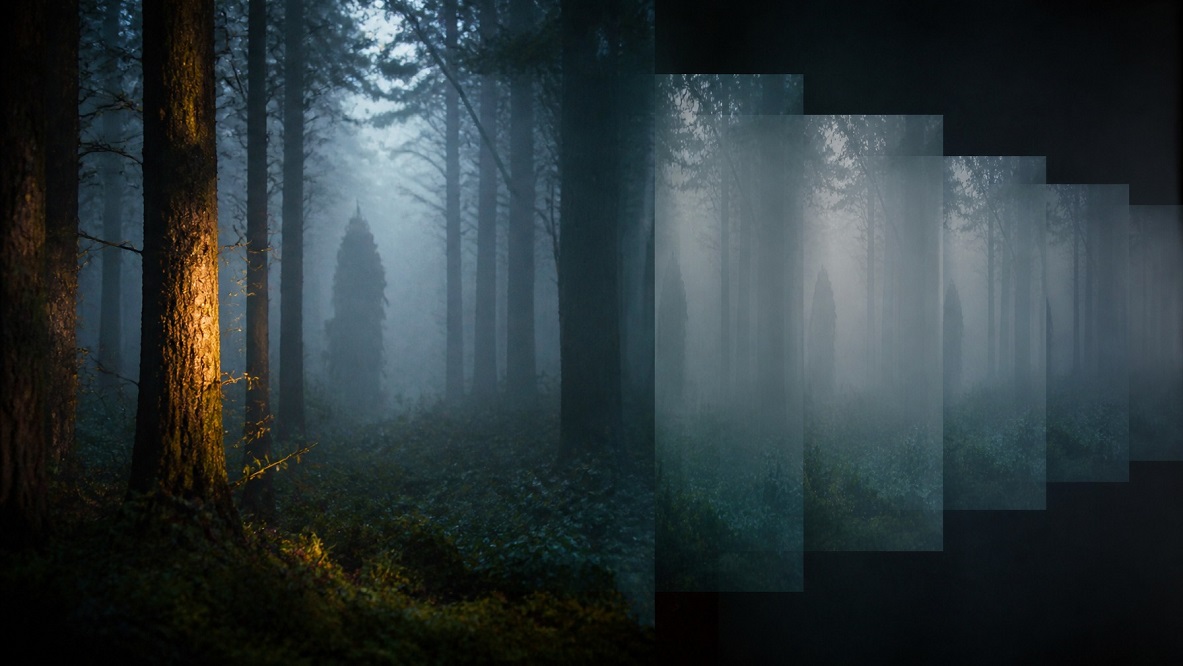
Rumors and cryptid legends spread through human memory because every retelling is a reconstruction, and reconstructions drift toward what people already expect. Details that fit our assumptions survive, while odd ones fade or get tidied up. Over many retellings, a vague sighting can become a shaggy, red-eyed creature everyone seems to describe the same way. Memory is not just a storage space for such stories. It is a sculptor.
Memory Rebuilds Instead of Replays
We often picture memory as a recording, but psychologists describe it as reconstruction. Each time you recall something, you rebuild it from fragments, filling gaps with plausible material. In the 1930s, Frederic Bartlett asked people to repeat a story from memory over and over, and found that it shifted toward the listeners’ own cultural expectations.
That is the core mechanism behind rumors. The story does not fade like a photograph. It changes shape.
How Retelling Pulls a Story Toward Expectation
Researchers Jing Xu and Thomas Griffiths formalized this idea with a mathematical model. In their account, each reconstruction blends a noisy memory with the person’s prior expectations. Repeated through a chain of people, the information converges toward what those expectations favor, so the transmitted material comes to reflect the shared prior.
Their experiments used simple stimuli, such as widths of fish, and found chains moving toward the averages that people had learned, though less strongly than the model predicted. That is a laboratory result, not a study of cryptids. But the mechanism, expectation shaping each retelling, applies naturally to folklore.
Why Cryptids Are Perfect Material
A cryptid is a creature whose existence is claimed but not established by science, such as Bigfoot or a lake monster. The ingredients for spreading are ideal. The event is brief and ambiguous: a shape at dusk, a footprint, a sound in the trees. Ambiguity leaves plenty of gaps for memory to fill.
The culture supplies the filler. If everyone knows what Bigfoot looks like, a blurry shape in the woods gets remembered in Bigfoot’s form. This is a reasonable inference from how reconstruction works, not a result from a specific cryptid study. It helps explain why sightings of a legendary creature often resemble the legend.

Why Emotion and Story Shape Help
Rumors travel best when they are vivid, emotional, and structured like a story. A creature that stalks a lonely road has a beginning, a threat, and an eerie ending. The shape is easy to remember and fun to tell, so it gets told more often.
Social factors also push the process along. People pass on stories that interest or alarm their listeners, and the teller usually trusts the source, a friend or relative, more than a stranger. Details that spoil the effect tend to be dropped without anyone noticing.
Skepticism Without Spoilsport Energy
None of this proves that every story is false. It shows that a story’s popularity, consistency, and detail are poor measures of its accuracy. A legend can be widely reported and richly described simply because memory and retelling produce those qualities on their own.
The enjoyable approach is to hold two thoughts at once. You can savor the mystery and still ask how the story might have been shaped along the way.
Run Your Own Telephone Game
You can watch the process in action:
- Write a short, strange story of about five sentences.
- Have one friend read it, then retell it to a second friend from memory.
- Have the second friend retell it to a third, and so on.
- Compare the final version with the original and note what changed.
Pay special attention to which details vanish and which get added. Those shifts show your group’s expectations at work.
Memory, Stories, and Where Nootropics Fit
Because memory reconstructs, careful note-taking is one of the best protections against drift. Curious readers sometimes ask about nootropics, supplements marketed for focus and memory. Evidence varies widely by ingredient, and no capsule replaces good records, practice, or sleep.
Frequently Asked Questions
Why Do Rumors Change as They Spread?
Each retelling reconstructs the story from memory, blending it with the teller’s expectations. Over many retellings, the story drifts toward what people expect.
What Did Bartlett’s Research Show?
In the 1930s, Frederic Bartlett found that stories repeated from memory shifted toward the cultural expectations of the people retelling them.
Does This Mean Cryptids Are Not Real?
No. It only shows that a story’s popularity and consistency are weak evidence, because memory and retelling can produce those qualities on their own.