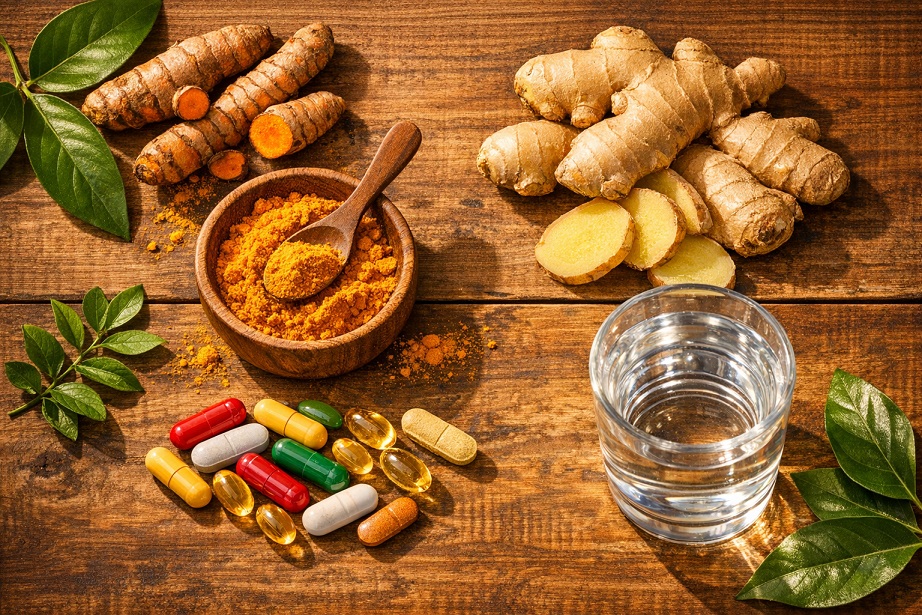
Some things are simply better together. Peanut butter and jelly. Coffee and mornings. And when it comes to natural joint health support, turmeric and boswellia might just be the most compelling duo in the botanical world. Both plants have long and impressive resumes in traditional medicine, both have accumulated substantial bodies of modern clinical research, and both have earned genuine respect from researchers studying inflammation and joint disease. But what makes them especially interesting is what happens when you combine them.
Two Ancient Remedies with Modern Scientific Credibility
Turmeric (Curcuma longa) has been used in Ayurvedic and traditional Chinese medicine for thousands of years, revered for its warming, anti-inflammatory properties. Boswellia serrata, derived from the resin of the Boswellia tree native to India and parts of Africa, has an equally ancient history in traditional medicine, where it was used to treat inflammatory conditions, respiratory issues, and joint pain. What’s remarkable is that modern science has gone a long way toward validating what traditional healers observed through generations of practice.
The active compounds in turmeric are curcuminoids, primarily curcumin. In boswellia, the key players are boswellic acids, a group of pentacyclic triterpene acids, the most potent of which is AKBA (acetyl-11-keto-beta-boswellic acid). Both curcumin and AKBA are anti-inflammatory powerhouses, but they work through meaningfully different biological pathways. And that difference is precisely what makes their combination so compelling for joint health.
Different Mechanisms, Complementary Effects
Curcumin exerts its anti-inflammatory effects primarily by inhibiting the NF-kB signaling pathway, a molecular switch that controls the production of a wide range of inflammatory cytokines and mediators. When NF-kB is activated, it triggers inflammation throughout the body. Curcumin also inhibits COX-2 and 5-LOX enzymes, which produce prostaglandins and leukotrienes that contribute to pain and swelling in joints.
Boswellic acids, and AKBA in particular, work predominantly through 5-LOX inhibition, blocking the production of pro-inflammatory leukotrienes that are heavily involved in the inflammatory cascade affecting joint tissue. Boswellia also inhibits the breakdown of cartilage matrix components by suppressing enzymes called human leukocyte elastase (HLE), which directly degrade connective tissue in inflamed joints. This is a mechanism that curcumin does not target with the same specificity.
In practical terms, this means each botanical is covering ground the other doesn’t fully reach. Together, they create a broader, more comprehensive blockade of the inflammatory pathways that drive joint discomfort, stiffness, and tissue degradation.
What the Research Says About the Combination
The individual research cases for curcumin and boswellia are each quite strong. Numerous clinical trials have demonstrated that high-quality curcumin extracts reduce joint pain and improve function in people with osteoarthritis, and several boswellia studies have produced similarly positive results. But a handful of combination studies have directly examined what happens when the two are used together, and the findings are encouraging.
A Notable Head-to-Head Study
One frequently cited study published in the journal Phytomedicine examined the combination of curcumin and boswellia extract compared to celecoxib, a commonly prescribed COX-2 inhibitor used to treat osteoarthritis pain. The study found that the combination of curcumin and boswellia was not only comparable to celecoxib in reducing pain and improving joint function, but actually outperformed it on several measures, including stair-climbing ability and walking distance. Notably, the botanical combination produced no serious adverse events, while celecoxib was associated with more side effects.
That’s a meaningful result. It doesn’t mean herbal supplements should replace prescribed medications for everyone, but it does suggest that the synergy between these two botanicals can produce clinically relevant outcomes that deserve serious consideration.

Anti-Inflammatory Synergy in the Lab
Laboratory studies have also pointed to genuine synergistic interactions between curcumin and boswellic acids. When researchers have tested the two compounds together on inflammatory cell models, they’ve observed effects that appear greater than what either compound produces alone. This kind of synergy, where two agents amplify each other’s effectiveness rather than simply adding together, is relatively rare and particularly valuable when formulating joint health supplements.
Protecting Joint Tissue Over the Long Term
One of the most underappreciated aspects of both turmeric and boswellia is their potential role in protecting joint tissue from long-term structural damage, not just reducing pain in the short term. Chronic joint inflammation is a destructive force. Over time, the continuous presence of inflammatory mediators in a joint environment leads to the progressive degradation of cartilage, erosion of bone surfaces, thickening of the synovial membrane, and permanent loss of joint function.
Curcumin has been shown to inhibit matrix metalloproteinases (MMPs), enzymes that break down the collagen and proteoglycan matrix of cartilage. Boswellia’s inhibition of HLE adds a complementary layer of connective tissue protection. Together, they may help preserve joint structure by addressing the enzymatic breakdown of cartilage from multiple angles simultaneously.
Reducing Synovial Inflammation
Both botanicals also have demonstrated effects on synovial membrane inflammation. The synovium is the tissue that lines the inside of the joint capsule and produces synovial fluid. In inflammatory joint conditions, the synovium becomes inflamed and thickened, a condition called synovitis, which drives pain, stiffness, and further cartilage damage. Research suggests both curcumin and boswellia can reduce synovial inflammation, contributing to a healthier joint environment overall.
The Absorption Factor
An important practical consideration when combining these two botanicals is bioavailability. Standard curcumin from turmeric powder is poorly absorbed on its own, which is why high-quality joint supplements typically use enhanced-absorption curcumin formats rather than plain turmeric. Similarly, boswellic acids are fat-soluble and benefit from formulation approaches that improve their uptake in the digestive tract. A supplement combining both botanicals is only as good as the absorption of each. Look for products that specify the form of curcumin used and the percentage of standardized boswellic acids, particularly AKBA content.
A Natural Strategy with a Strong Foundation
What makes the turmeric and boswellia combination so appealing, beyond the research, is the way it reflects a sensible approach to joint health. Inflammation is not a single event driven by a single molecule; it’s a complex cascade involving multiple enzymes, signaling pathways, and immune cells. A strategy that addresses multiple points in that cascade simultaneously is almost always going to be more effective than one that targets only a single pathway.
Neither turmeric nor boswellia is a silver bullet, and both work best as part of a consistent, long-term routine rather than as an occasional remedy. But for those looking to support joint comfort and mobility through evidence-based natural ingredients, the combination of curcumin and boswellic acids represents one of the most well-supported and logical approaches available. Two ancient plants, working together in ways that are only now being fully understood, offering genuinely meaningful support for joints that need it.