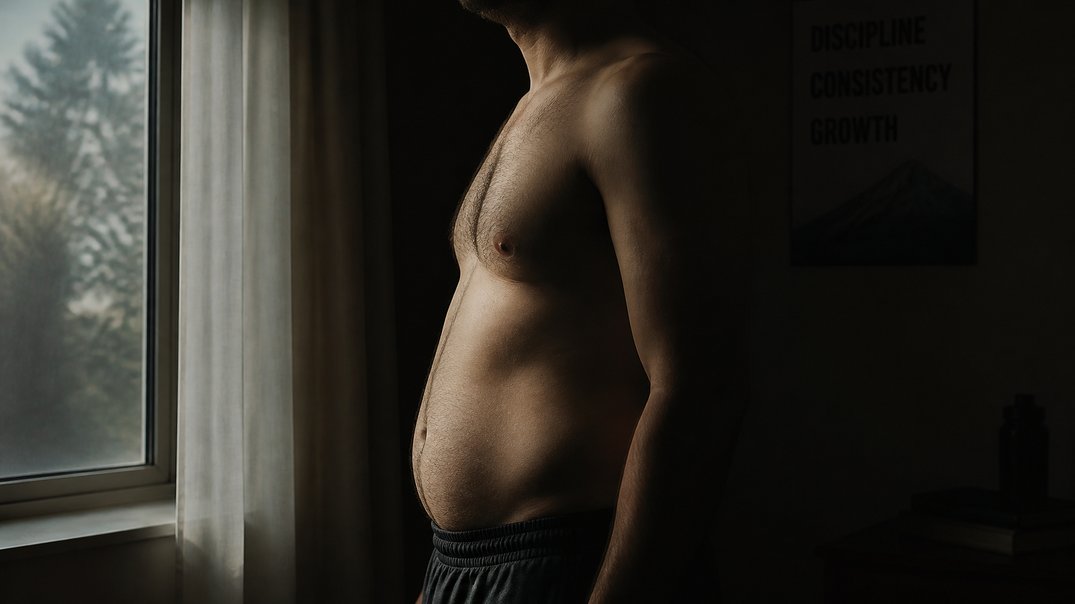
Yes, losing belly fat can meaningfully increase testosterone levels, especially if your levels are currently low. Belly fat, particularly the deep visceral fat around your organs, is metabolically active tissue that actively works against your testosterone production. Shrink that fat, and your body often responds with a real hormonal rebound.
This isn’t just a motivational talking point. It’s backed by clinical research, and the mechanism behind it is pretty fascinating once you understand it.
How Visceral Fat Suppresses Testosterone Production
Fat tissue isn’t just passive storage. It behaves almost like an organ of its own, and one of its jobs is producing an enzyme called aromatase. Aromatase converts testosterone into estradiol, a form of estrogen. The more visceral fat you carry, the more aromatase activity you have, and the more testosterone gets converted away rather than staying available for your body to use.
On top of that, excess body fat is linked to higher insulin resistance and low-grade inflammation, both of which interfere with the signals your brain sends to your testes to produce testosterone in the first place. It becomes something of a feedback loop: lower testosterone makes it easier to gain fat, and more fat further suppresses testosterone. The encouraging part is that this loop runs in reverse just as reliably.
What the Research Shows About Weight Loss and Testosterone
A well-known clinical study published on PubMed followed abdominally obese men through a structured weight loss program. After losing significant body fat, the men saw a sustained increase in free testosterone that held up even a year later during weight maintenance. That’s a meaningful finding because it shows the benefit isn’t a temporary blip. It sticks around as long as the fat stays off.
Other research has found that waist circumference specifically, more than overall body weight, tends to be one of the strongest predictors of low testosterone in men. That lines up with what we know about visceral fat being the more hormonally disruptive type compared to fat stored elsewhere on the body.

Which Fat Loss Strategies Move the Needle Most
Not every approach to losing belly fat delivers the same testosterone benefit. A few strategies stand out:
- Resistance training: Lifting weights builds muscle while burning fat, and muscle mass itself supports healthy testosterone levels.
- Higher-intensity cardio: Studies comparing exercise intensities have found that more vigorous efforts, like brisk intervals, tend to boost testosterone more than long, slow, steady-state cardio alone.
- Moderate calorie deficits: Extreme, prolonged calorie restriction can backfire and suppress testosterone further, so a steady, sustainable deficit works better than crash dieting.
- Adequate sleep: Poor sleep raises cortisol and disrupts the hormonal environment needed for both fat loss and testosterone production, so this piece can’t be skipped.
Setting Realistic Expectations for Your Results
Belly fat loss will not turn low testosterone into elite athlete numbers overnight, and it’s not the only factor at play. Age, sleep quality, stress, and overall diet all matter too. But for a lot of men, especially those carrying excess weight around the midsection, trimming that fat is one of the most direct and evidence-backed levers available for supporting healthier testosterone naturally.
If you’ve made real changes to your body composition and still feel like something’s off, it’s worth getting your levels checked by a doctor rather than guessing. A simple blood test can tell you where you actually stand.
Frequently Asked Questions
How much belly fat do I need to lose to see a testosterone increase?
There’s no universal number, but research suggests even a moderate reduction in waist circumference and overall body fat can produce measurable increases in free testosterone, particularly in men who started out with excess visceral fat.
How long does it take to see testosterone improve after losing fat?
Some studies have shown increases within a matter of weeks during active weight loss, with the benefits holding steady or even improving further during a year of weight maintenance.
Does spot reduction of belly fat work for boosting testosterone?
No. You cannot target fat loss to one area of the body. Overall fat loss through diet and exercise is what reduces visceral fat and, in turn, supports testosterone.
Can testosterone supplements help while I’m losing belly fat?
Some men use natural testosterone support supplements alongside diet and exercise changes, though results vary and they work best as a complement to lifestyle changes rather than a replacement for them.