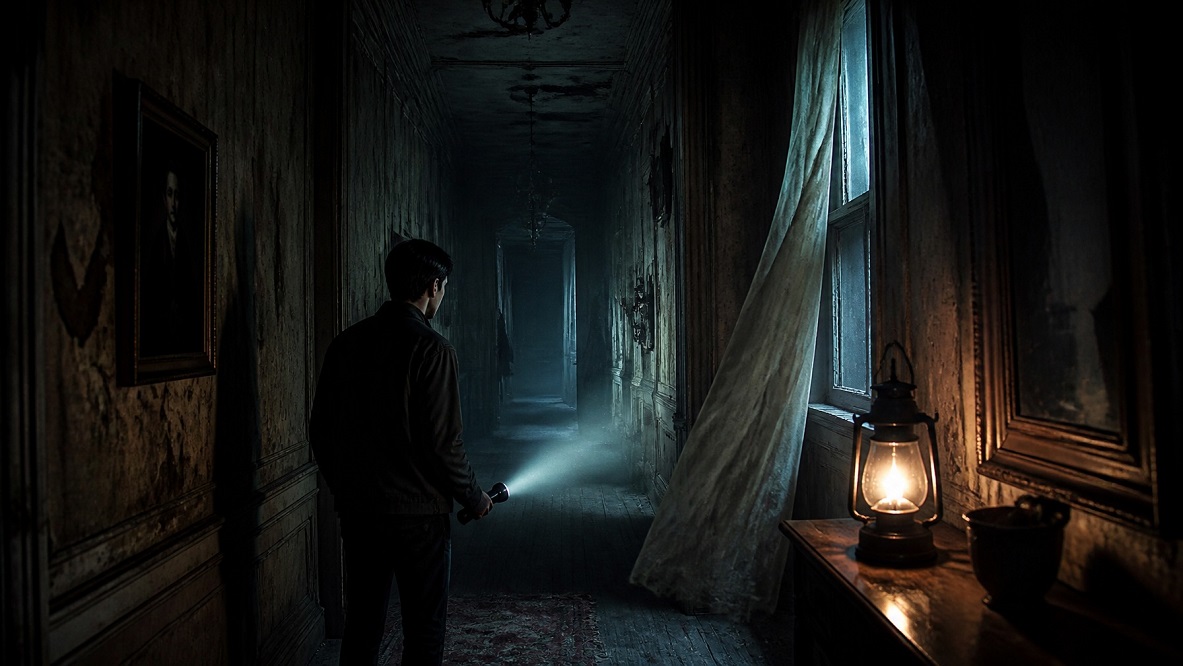
Haunted places feel haunted because the brain combines expectation, suggestion, and ordinary environmental cues into a sense of presence. Tell someone a room is haunted, dim the lights, add a cold draft, and the mind is primed to interpret every creak as meaningful. Studies of reputedly haunted sites suggest that ordinary features of a place may explain a good deal of what people report, though the full picture is still debated.
What Researchers Found at Haunted Sites
In a 2003 study in the British Journal of Psychology, Richard Wiseman and colleagues investigated two reputedly haunted locations, Hampton Court Palace and the South Bridge Vaults in Edinburgh. Participants walked around each site and reported where they had unusual experiences.
They reported significantly more experiences in areas with a haunted reputation, but this was not related to their prior knowledge of those reputations. The locations of the experiences also correlated with factors such as variation in local magnetic fields and lighting levels. The authors suggested that alleged hauntings may be, at least in part, people responding to ordinary features of their surroundings.
Testing a Haunted Room on Purpose
Another team, led by Christopher French at Goldsmiths and including Usman Haque, built a room to test popular theories. In the Haunt Project, 79 volunteers spent 50 minutes alone in a dim, cool, featureless chamber. The researchers varied two factors: infrasound, which is sound too low to hear consciously, and complex electromagnetic fields.
Many participants, about 80 percent, reported odd sensations such as feeling dizzy or strange. But the number of reported experiences did not differ by condition. The authors called suggestibility the most parsimonious explanation, since everyone was told beforehand that they might feel unusual sensations. They also noted caveats, including that the experimenters knew the conditions and that participants moved freely, so exposure was not tightly controlled.
Expectation Is Powerful
Expectation shapes perception. If you are told a place is haunted, you scan for evidence and interpret ambiguous input accordingly. A shadow becomes a figure, a draft becomes a touch, and a pipe knocking becomes a footstep.
The brain is also built to detect agents, living things with intentions, because missing a predator or a rival is costly. It’s reasonable to expect that this tendency makes a sense of being watched easy to trigger in an unfamiliar, dimly lit place. That is an inference from general principles, not a finding of these particular studies.

Dark, Cold, and Quiet Matter
The Haunt researchers noted that a sparse, dim, cool room might itself produce mild perceptual deprivation in some people. With less sensory input, the brain leans on its own guesses. Old buildings tend to supply exactly these conditions: poor light, drafts, odd acoustics, and creaking materials.
Atmosphere also does emotional work. Anticipation raises arousal, and arousal makes ordinary sensations feel more intense. A pounding heart is easily read as evidence that something is wrong.
Keeping the Mystery Honest
These findings do not prove that no one has ever experienced anything unexplained. They show that many experiences have mundane contributors, and that suggestion is potent. Wiseman’s team found a link with physical features such as lighting and magnetic variation, but a correlation does not establish a cause, and the Haunt Project did not find an effect from the two environmental factors it tested.
The healthy approach is curiosity with controls. Before deciding that a place is haunted, check the temperature, the light, the noise, and your own state of mind.
Investigate a Spooky Place Yourself
Next time somewhere gives you chills, try a few simple checks:
- Note the lighting, temperature, drafts, and background noise.
- Rate how uneasy you feel before and after learning the place’s reputation.
- Ask a friend who knows nothing about the legend to describe the room.
- Look for ordinary causes of any sounds, such as pipes or wind.
Attention, Calm, and Where Nootropics Fit
Careful observation takes a settled mind and a clear head. Curious readers sometimes ask about nootropics, supplements marketed for focus and memory. Evidence varies widely by ingredient, and no capsule replaces sleep or critical thinking.
Frequently Asked Questions
Why Do Haunted Places Feel Creepy?
Expectation, suggestion, dim lighting, and unusual sounds can combine to create a sense of presence. Studies suggest ordinary features of a place may contribute to reported experiences.
Does Infrasound Cause Ghost Sightings?
In the Haunt Project, the number of reported experiences did not differ with infrasound or electromagnetic fields. The authors pointed to suggestion as the most likely explanation.
Do These Studies Prove Ghosts Do Not Exist?
No. They show that mundane factors and suggestion can explain many experiences, but they cannot rule out everything.