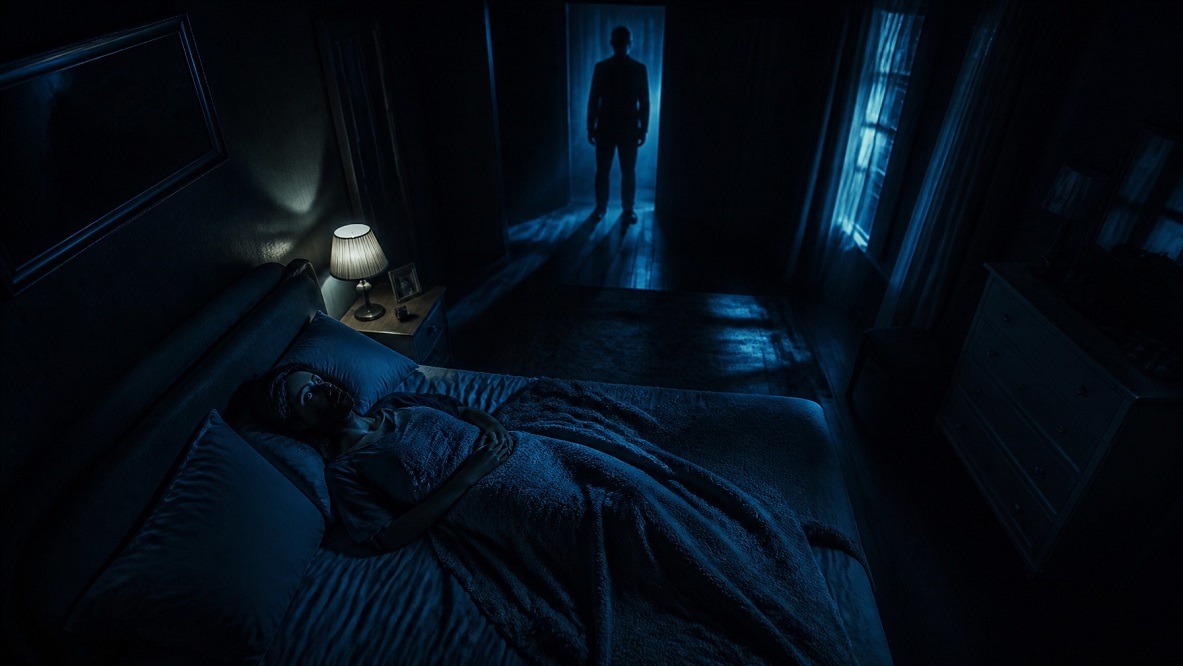
Sleep paralysis likely explains many folklore demons. The brain wakes while the muscle shutdown of REM sleep lingers, leaving you awake, frozen, and often sensing a threatening presence. Accounts of nightmare riders, hags, and shadow figures from around the world match the experience closely. It is frightening but common, and it is a striking example of the brain building monsters out of ordinary sleep biology.
What Happens in the Brain
During REM sleep, when most vivid dreaming occurs, neurotransmitters switch off motor neuron activity so the body stays still instead of acting out dreams. According to a University of Waterloo report on sleep paralysis, that paralysis sometimes lingers after the sleeper wakes.
Meanwhile, the amygdala, the brain’s threat detector, can trigger the fight-or-flight response, but the body cannot move. The cause of the mismatch is not fully understood. What you experience is a wide-awake mind in a body that will not answer.
The Visions People Report
The hallucinations follow a pattern. Sufferers often sense an intruder or a presence in the room and feel pressure on the chest, or the sensation of being crushed, dragged, or touched. Visual, tactile, and auditory hallucinations are common, ranging from shadowy figures and demons to witches. Fear tends to push the hallucinations in a frightening direction, which can create a loop: the scarier the vision, the more fear, and the more vivid the vision.
One Experience, Many Names
The consistency across cultures is what makes the connection compelling. The same report lists a long run of examples:
- The mare of European folklore, a malevolent spirit that rides sleepers’ chests and gave us the word nightmare.
- Newfoundland’s Old Hag, and the ancient Greek choker, known as pnigalion.
- Incubi and succubi, along with spirits from Suriname, St. Lucia, Thailand, Ethiopia, and Inuit tradition.
- The Japanese term kanashibari, now widely used for the experience itself.
The art world noticed too. Psychiatrist Jerome Schneck linked Henri Fuseli’s 1781 painting The Nightmare to sleep paralysis in 1969. A passage in Melville’s Moby Dick has also been connected to it.

How Common Is It?
More common than its mysterious reputation suggests. Citing psychologist James Cheyne of the University of Waterloo, the report says up to 40% of people experience sleep paralysis once or twice in their lives, and up to 6% experience repeated episodes over long periods. Cheyne argues that this frequency suggests it may underlie many historical and folk terrors.
Psychologist Christopher French and others have suggested that modern alien abduction accounts may partly reflect the same experience, shaped by popular media. French also proposes that belief systems and the content of hallucinations influence each other across generations.
It is a neat thought: biology supplies the raw fear, and culture supplies the costume. One culture sees a hag, another sees a shadow man, and another sees a visitor from space.
What to Do If It Happens
Some researchers describe techniques for calming fear during an episode, such as reminding yourself that it is temporary, which can occasionally lead to a calmer, lucid state. Keeping a regular sleep schedule is also a common suggestion. If episodes are frequent or distressing, a doctor can help, and it is worth mentioning if they occur with other sleep problems.
Sleep, Perception, and Where Nootropics Fit
This is a story about how much your brain depends on sleep, and how strange perception can become when its stages overlap. Curious readers sometimes ask about nootropics, supplements marketed for focus and memory. Nothing here suggests that any supplement affects sleep paralysis, and evidence varies widely by ingredient.
Frequently Asked Questions
Is Sleep Paralysis Dangerous?
It is frightening but widely described as a common experience. If episodes are frequent or distressing, talk with a doctor.
Did Folklore Demons Come From Sleep Paralysis?
Possibly many of them. Researchers like James Cheyne argue the experience may underlie numerous folk terrors, though that cannot be proven for any individual legend.
How Common Is Sleep Paralysis?
According to a University of Waterloo report citing James Cheyne, up to 40% of people experience it once or twice in their lives, and up to 6% have repeated episodes.