
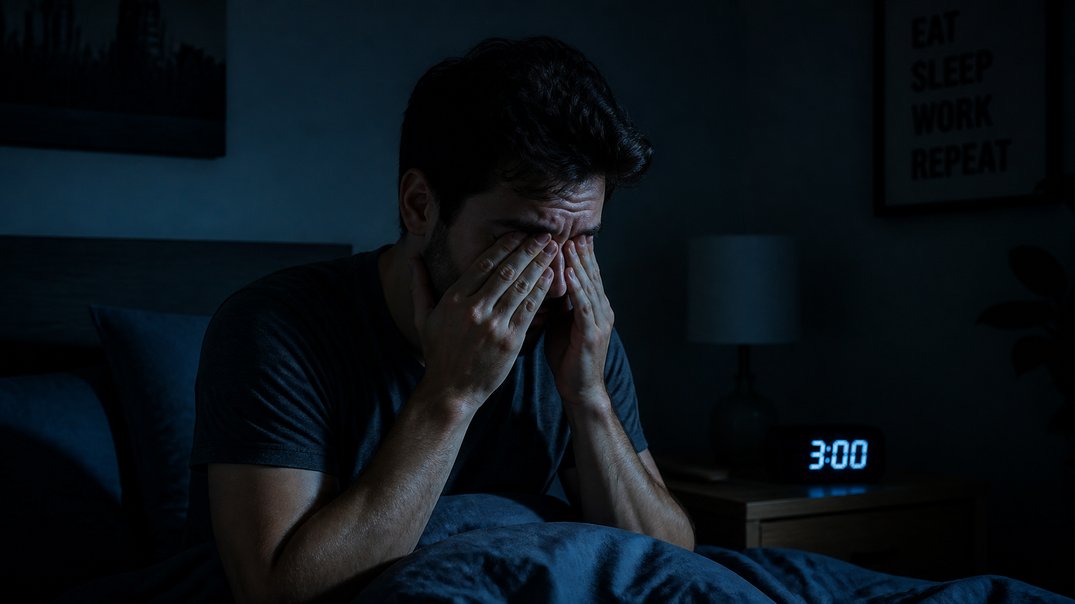
Yes, poor sleep can cause low testosterone, and the effect shows up faster than most men expect. Testosterone production is closely tied to your sleep cycle, and cutting sleep short, even for just a week, has been shown to meaningfully reduce testosterone levels in otherwise healthy men.
If you’ve been running on five or six hours a night and wondering why your energy and motivation feel off, your sleep schedule is a reasonable place to start looking.
Why Testosterone Production Depends on Sleep
Most of your daily testosterone release happens during sleep, with production ramping up shortly after you fall asleep and peaking during the REM stage. If you’re cutting sleep short or waking up frequently throughout the night, you’re interrupting the exact window your body relies on to produce this hormone. It’s not unlike cutting a workout short right before the muscle-building phase kicks in. You’re missing the part that actually matters most.
What the Research Actually Found
One of the most cited studies on this topic came out of the University of Chicago, where researchers restricted healthy young men to five hours of sleep per night for one week in a controlled lab setting. As reported by UChicago Medicine, testosterone levels dropped significantly after just seven nights of restricted sleep, an effect roughly comparable to the natural decline seen with ten to fifteen years of aging.
That’s a striking finding. It means a stretch of bad sleep, the kind plenty of men experience during a demanding work project or a new baby’s first few months, can temporarily knock your hormone levels down to what you’d expect from someone well over a decade older.
It’s Not Just Duration, It’s Quality
Sleep duration gets most of the attention, but sleep quality matters just as much. Conditions like sleep apnea, where breathing is repeatedly interrupted throughout the night, are strongly associated with lower testosterone levels, even in men who technically spend enough hours in bed. Frequent waking, restless sleep, and poor sleep environment (too much light, an inconsistent schedule, screen use right before bed) can all undercut the deep, uninterrupted sleep your body needs to do its hormonal work.

The Cortisol Connection Makes It Worse
Poor sleep doesn’t just reduce testosterone directly, it also raises cortisol, your body’s primary stress hormone. Elevated cortisol interferes with the hormonal signaling pathway responsible for testosterone production, effectively working against you from a second angle. Chronic short sleep can create a compounding effect: less testosterone from disrupted sleep cycles, plus additional suppression from elevated stress hormones.
What You Can Actually Do About It
The encouraging part of this research is that the relationship works in both directions. Just as short sleep drags testosterone down, restoring healthy sleep habits tends to help levels recover. A few practical starting points:
- Aim for seven to nine hours most nights rather than treating five or six as sufficient.
- Keep a consistent sleep and wake time, even on weekends.
- Limit screens and bright light in the hour before bed.
- If you snore heavily or wake up gasping, talk to a doctor about screening for sleep apnea.
Sleep is one of the few testosterone-related factors that’s entirely within your control and doesn’t cost anything to fix. For a lot of men, prioritizing it turns out to be one of the highest-leverage changes available.
Frequently Asked Questions
How many hours of sleep do I need to protect my testosterone levels?
Most research points to seven to nine hours per night as the range associated with healthy hormone production, with consistent sleep restriction below that threshold linked to measurable declines.
Can one bad night of sleep lower my testosterone?
A single night likely has a minimal effect, but sustained sleep restriction over several days to a week has been shown to significantly reduce testosterone levels.
Does sleep apnea specifically affect testosterone?
Yes, sleep apnea is strongly associated with lower testosterone levels, likely due to the repeated interruptions in deep sleep stages where testosterone production is highest.
Will fixing my sleep restore my testosterone to normal?
For many men whose low testosterone is primarily driven by poor sleep, improving sleep habits can help levels recover, though other contributing factors should also be addressed for the best results.