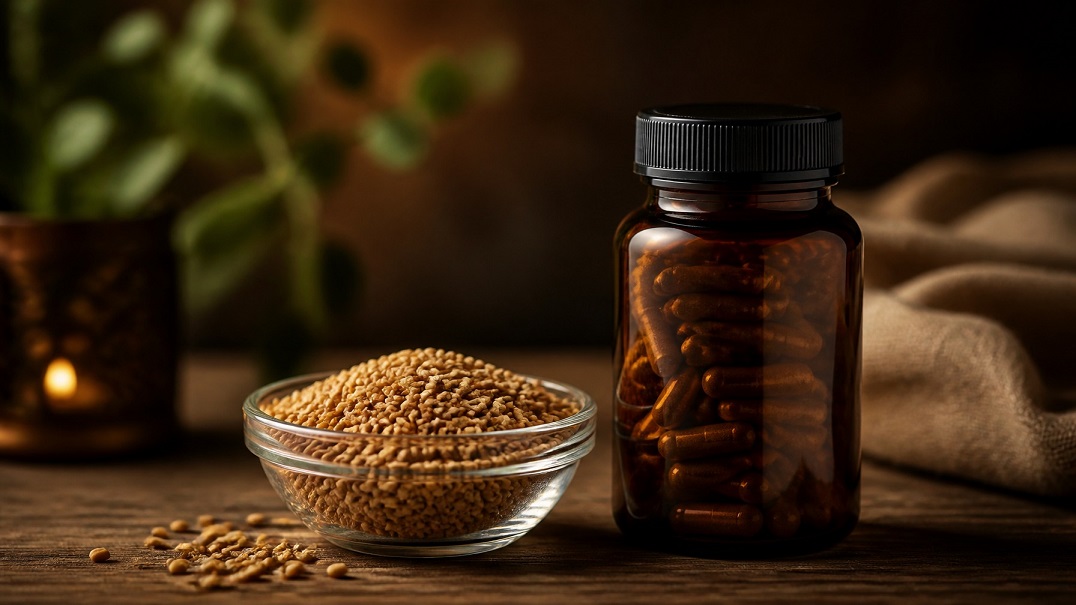
Yes, several clinical studies suggest fenugreek extract can raise testosterone levels, particularly in middle-aged and older men. A 2020 meta-analysis of randomized clinical trials found that fenugreek extract had a significant effect on total serum testosterone compared to placebo, making it one of the better-studied plant-based ingredients in this space.
That said, “significant” in research terms doesn’t always mean dramatic in real life, so it’s worth understanding what the studies actually measured and how fenugreek is thought to work.
What the Fenugreek Research Actually Shows
The meta-analysis, published in Phytotherapy Research and indexed on PubMed, pooled data from four randomized clinical trials comparing fenugreek extract supplementation to a control group. The researchers concluded that fenugreek extract supplementation had a measurable, statistically significant effect on total serum testosterone in men. That’s a meaningful finding, since meta-analyses combine multiple studies to give a more reliable picture than any single trial could provide on its own.
Individual trials add useful detail to that overall picture. A double-blind study of 120 men aged 43 to 70 found that 600 mg of a standardized fenugreek seed extract taken daily for 12 weeks reduced age-related symptoms of low testosterone and improved reported sexual function alongside the hormonal changes.
How Fenugreek Is Thought to Support Testosterone
Fenugreek seeds contain natural compounds called saponins, including one called protodioscin, which researchers believe may influence the enzymes involved in converting testosterone into other hormones like estrogen and dihydrotestosterone (DHT). By potentially slowing this conversion process, more of the testosterone your body already produces may remain available and usable rather than being converted away.
It’s worth noting that fenugreek doesn’t appear to dramatically increase total testosterone production from scratch. Instead, the research points toward it helping preserve or slightly elevate the testosterone your body is already making, particularly the free, usable fraction.
Not Every Study Agrees
Fairness matters here. Not all fenugreek research has produced the same results. A more recent double-blind, randomized, controlled trial using a different fenugreek extract formulation did not find a significant increase in plasma testosterone, even though earlier studies using different extracts had shown positive effects. This inconsistency likely comes down to differences in extract standardization, dosage, and study population, and it’s a good reminder that not all fenugreek supplements are created equal.

What to Look For If You’re Considering Fenugreek
If fenugreek’s testosterone research interests you, a few practical points stand out from the studies that showed the most consistent benefits:
- Look for a standardized extract rather than raw fenugreek powder, since standardization ensures a consistent concentration of the active saponin compounds.
- Most positive studies used doses in the 500 to 600 mg per day range.
- Benefits, when present, generally became noticeable over 8 to 12 weeks of consistent use, not overnight.
- Fenugreek is often paired with other testosterone-supportive ingredients, like zinc or ashwagandha, in commercial formulations, which may work through complementary mechanisms.
Setting Realistic Expectations
Fenugreek has one of the more encouraging research profiles among natural testosterone-support ingredients, but it’s not a substitute for the fundamentals. Sleep, body composition, exercise, and stress management still carry more overall influence on your hormone levels than any single supplement. Fenugreek fits best as a complementary piece of a broader approach rather than a stand-alone fix, and if you have any underlying health conditions or take medication, it’s worth checking with a doctor before adding a new supplement to your routine.
Frequently Asked Questions
How long does it take for fenugreek to raise testosterone?
Most clinical trials showing positive results used consistent daily supplementation for 8 to 12 weeks before measuring meaningful changes in testosterone levels.
What is the best dose of fenugreek for testosterone support?
Most successful studies used standardized fenugreek extracts in the range of 500 to 600 mg per day, though individual products vary.
Does fenugreek work for younger men, or only older men?
Most of the strongest positive studies focused on middle-aged and older men, so the evidence for younger men with already-healthy testosterone levels is less clear.
Are there any side effects associated with fenugreek supplementation?
Fenugreek is generally well tolerated, though some people report mild digestive upset or a maple-like odor in sweat and urine as a harmless side effect.