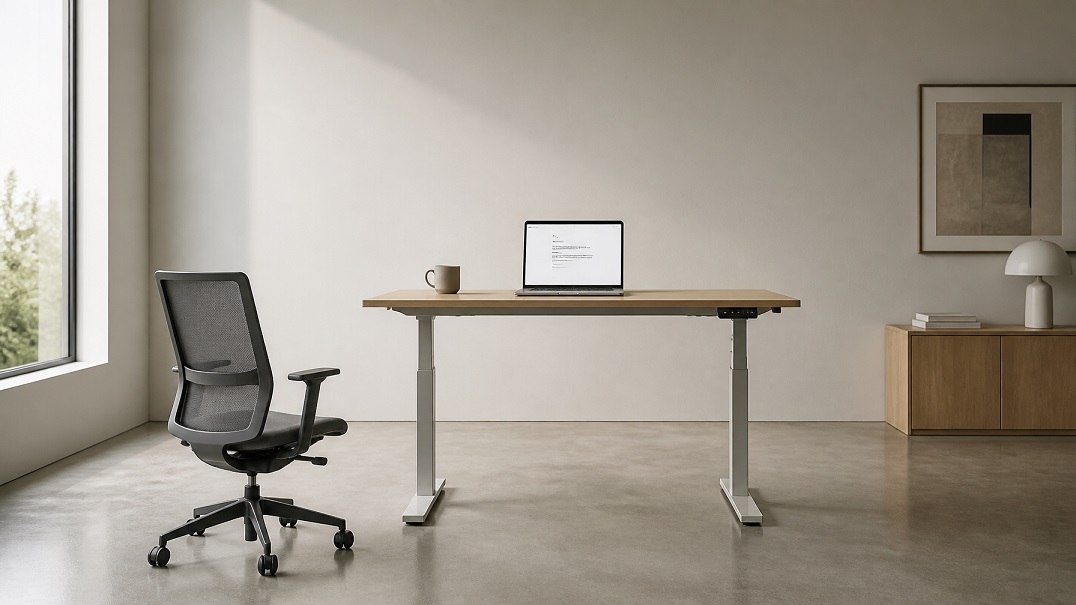
The standing desk arrived in the mainstream office around 2013 and has not left. Its adoption was driven partly by epidemiological research on the health risks of prolonged sitting — a literature that produced, in simplified media coverage, the memorable but misleading phrase “sitting is the new smoking” — and partly by a broader wellness movement in workplace design that positioned ergonomic furniture as both a health investment and a signal of progressive organizational values. By the mid-2010s, height-adjustable desks had become a standard offering in many corporate offices, and the claim that standing while working improved both health and cognitive performance had acquired the status of received wisdom in workplace wellness circles.
The evidence for that claim is, on examination, considerably more nuanced than its popular reputation suggests. Standing desks do appear to offer genuine health benefits relative to prolonged uninterrupted sitting, and there is real neuroscience behind the cognitive effects of posture and movement on brain function. But the specific claims made about standing desks and cognitive performance — that standing improves concentration, creativity, and executive function — are supported by a research literature that is smaller, more methodologically variable, and more qualified in its findings than the marketing implies. Some of those findings are positive. Some are negative. Several are genuinely surprising. And the overall picture is one that recommends neither unconditional enthusiasm nor dismissal, but a specific understanding of what standing actually does to the brain and under what conditions it helps or hurts.
The Sedentary Work Problem: Why the Desk Matters
The starting point for the standing desk debate is the research on sedentary behavior and its consequences — a literature that is genuinely robust and genuinely alarming in ways that the “sitting is the new smoking” shorthand fails to capture with any precision.
Prolonged Sitting and Cerebrovascular Function
The most direct pathway from prolonged sitting to cognitive impairment runs through cerebrovascular function — the health and efficiency of the blood vessels supplying the brain. A series of studies by Mark Hamer and colleagues at University College London, examining data from the UK Biobank, found that sedentary time was independently associated with reduced brain volume in regions including the medial temporal lobe — structures that include the hippocampus and are critical for memory formation and cognitive flexibility. The association held after controlling for physical activity levels, meaning that the cognitive costs of prolonged sitting were not simply a proxy for being physically inactive overall: the specific pattern of sitting continuously for extended periods imposed brain structure consequences independent of whether the same person exercised at other times.
The mechanism involves cerebral blood flow. Prolonged sitting reduces blood flow to the brain through a combination of postural effects on cardiovascular function and the absence of the muscular activity that, during movement and standing, assists venous return to the heart. A study by Smith and colleagues at the University of Missouri, published in the Journal of Applied Physiology in 2016, found that three hours of prolonged sitting significantly reduced middle cerebral artery blood flow velocity — a measure of blood delivery to the brain — and that the reduction was not fully reversed by a brief period of standing. Breaking sitting with short walking breaks was more effective at restoring cerebral blood flow than transitioning to standing alone.
The Sedentary Behavior and Mental Health Link
Beyond cerebrovascular effects, prolonged sedentary behavior is associated with elevated risk of depression and anxiety — conditions with direct and well-characterized cognitive consequences through prefrontal hypofunction, reduced dopaminergic signaling, and hippocampal volume loss. A meta-analysis by Biswas and colleagues in the Annals of Internal Medicine in 2015 found that sedentary time was independently associated with depression risk, with the association present even in people who met physical activity guidelines — confirming that sitting breaks the connection between exercise and mental health protection that one might expect. For office workers sitting for seven to nine hours per day, the accumulated mental health consequences of sedentary behavior are a genuine cognitive health risk that operates independently of and in addition to the stress and environmental factors discussed elsewhere in this series.
What Standing Actually Does to the Brain
The transition from sitting to standing is a meaningful physiological event, and its effects on the brain are more complex than simply reversing the consequences of sitting. Standing activates different muscle groups, changes cardiovascular dynamics, alters cortisol and norepinephrine levels, and affects the arousal systems that modulate cognitive performance — all of which have implications for the type and quality of cognitive work performed in each posture.

Arousal, Norepinephrine, and Standing
Standing produces a mild increase in physiological arousal relative to sitting. Heart rate is modestly elevated, sympathetic nervous system activity increases slightly, and norepinephrine — the catecholamine neurotransmitter most directly associated with alertness and attentional focus — rises correspondingly. These changes are consistent with the predictions of the Yerkes-Dodson law: moderate increases in arousal improve performance on tasks that benefit from heightened attention and processing speed, while impairing performance on tasks that require relaxed, diffuse, creative thinking or fine motor precision.
A study by Mehta and colleagues at Texas A&M University, published in IIE Transactions on Occupational Ergonomics and Human Factors in 2012, examined the effects of sit-stand workstations on engagement and performance in a call center environment over a 6-month period. Workers with sit-stand desks showed significantly higher performance on their primary task — processing calls — than the seated control group, with the performance advantage increasing over the study period. The task involved well-practiced, structured verbal interaction — a context where the alerting effect of standing would be predicted to help, and where fine motor precision and creative ideation were not required.
The Executive Function Evidence
Studies examining the effects of standing on executive function — the higher-order cognitive processes of planning, working memory, cognitive flexibility, and abstract reasoning supported by the prefrontal cortex — have produced more mixed results. A study by Mehta and colleagues, published in the International Journal of Environmental Research and Public Health in 2014, found improvements in executive function performance under standing conditions in healthy adults, as measured by standard neuropsychological tests. A subsequent study by Bantoft and colleagues found no significant difference in cognitive performance between sitting and standing conditions on a battery of executive function tests.
The inconsistency across studies is partially explained by individual differences in baseline arousal — the Yerkes-Dodson prediction that moderate arousal benefits performance applies most clearly to people whose baseline arousal is suboptimal, and that the same arousal increase impairs performance in people already at or above their optimal arousal level. For workers who are alert and well-rested, the additional arousal from standing may push them into the over-aroused range for complex cognitive tasks. For workers who are fatigued or drowsy, the same arousal increment may bring them to optimal range. The net cognitive effect of standing on executive function is therefore genuinely variable across individuals and conditions rather than being uniformly positive.
The Surprising Findings on Creative Thinking
Perhaps the most interesting finding in the standing desk and cognition literature concerns its effects on creative thinking — the kind of divergent, associative, loosely structured ideation that underlies novel problem-solving and innovation. The popular narrative positions standing desks as creativity enhancers, partly because standing meetings have become associated with more dynamic and generative discussions. The research is more nuanced.
A study by Oppezzo and Schwartz at Stanford, published in the Journal of Experimental Psychology: Learning, Memory, and Cognition in 2014, examined the effects of walking on creative thinking and found significant positive effects — walking produced substantially higher divergent thinking scores than sitting. Crucially, standing alone did not produce the same effect. The creativity benefit appeared to be specific to walking rather than to the upright posture per se. A person sitting in an office chair and a person standing at a desk showed similar creativity performance; a person walking on a treadmill showed substantially higher creativity. The mechanism appears to involve the specific physiological and cognitive dynamics of locomotion — the rhythmic, low-demand movement that activates the default mode network and allows the kind of loosely associative thinking that characterizes creative ideation — rather than anything specific to the standing posture.
This finding has practical implications: standing desks, by themselves, do not deliver the creative thinking benefits that walking delivers. Treadmill desks — a more demanding and less widely adopted intervention — may do so, but at the cost of the fine motor precision and focused verbal processing that walking impairs. The relationship between movement, posture, and different types of cognitive work is not one that can be optimized by a single ergonomic solution.
The Physical Costs of Prolonged Standing
A complete account of standing desk effects on cognitive performance must include the physical consequences of prolonged standing, which are real, well-documented, and directly relevant to cognitive function through their effects on discomfort, fatigue, and stress.
Musculoskeletal Fatigue and Cognitive Drain
Prolonged standing produces musculoskeletal fatigue — particularly in the lower back, legs, and feet — that accumulates over the course of a working day and impairs both physical comfort and cognitive performance through a mechanism of attentional competition: physical discomfort draws attentional resources toward monitoring and managing the discomfort, reducing the resources available for the primary cognitive task. A study by Commissaris and colleagues found that workers using standing desks for more than four hours continuously reported significantly higher physical fatigue and discomfort than those alternating between sitting and standing, with corresponding decrements in self-reported concentration and task engagement.
The threshold at which prolonged standing becomes counterproductive varies with the individual’s fitness, footwear, flooring material, and task demands, but research consistently suggests that two to four hours of standing per eight-hour working day represents an upper bound for cognitive benefit, and that standing beyond this duration produces physical fatigue that erodes the cognitive advantages. Anti-fatigue mats — a frequently recommended accessory for standing desks — reduce but do not eliminate this fatigue accumulation, producing modest improvements in comfort and subjective concentration for workers standing for extended periods.
Varicose Veins, Cardiovascular Risk, and the Nuanced Health Picture
The health benefits of standing relative to prolonged sitting are real but not unlimited. A study by Biswas and the Stand Up Australia group found that replacing two hours of sitting with standing produced improvements in blood glucose regulation and cardiovascular risk markers. However, a large prospective study by Jørgen Hallal and colleagues, examining over 7,000 adults over a decade, found that prolonged occupational standing was independently associated with increased risk of varicose veins and, in some analyses, cardiac disease — suggesting that the optimal posture for long-term cardiovascular health is neither continuous sitting nor continuous standing but dynamic alternation between the two. The sedentary work problem is not solved by substituting one static posture for another; it is addressed by increasing postural variety and movement frequency.

Sit-Stand Dynamics: What the Research Recommends
The most useful practical finding from the standing desk literature is not that standing is better than sitting, but that dynamic alternation between postures — combined with frequent brief movement breaks — produces better cognitive and health outcomes than either static posture sustained for extended periods. This finding is consistent across the health, ergonomics, and cognitive performance literatures, and it points toward a specific evidence-based recommendation that differs materially from both the sitting desk status quo and the standing desk marketing.
The Optimal Sit-Stand Ratio
Several research groups have attempted to identify the optimal ratio of sitting to standing in a working day. A systematic review by Chau and colleagues recommended a target of at least two hours of standing and light activity per eight-hour working day as a minimum, with a longer-term target of four hours — findings incorporated into guidelines published by Public Health England and several occupational health bodies. The emphasis on “at least” and “target” reflects the reality that most sedentary office workers are currently sitting for seven to nine hours per day and that any meaningful reduction in continuous sitting time produces health and cognitive benefits, even if the optimal ratio is not achieved.
Research specifically on cognitive performance, as opposed to health markers, suggests that the benefits of standing are most pronounced in the first one to two hours of standing after a period of prolonged sitting — when the arousal-enhancing effects are present and physical fatigue has not yet accumulated — and that cognitive performance benefits diminish or reverse with extended standing beyond this window. A practical sit-stand schedule that alternates roughly 45 to 60 minutes of sitting with 15 to 20 minutes of standing aligns with both the health and cognitive performance evidence, providing the arousal and blood flow benefits of standing while limiting the fatigue accumulation that erodes those benefits.
Movement Breaks as the Higher-Value Intervention
The research consistently suggests that brief walking breaks — even two to five minutes of walking per hour — produce cognitive and health benefits that standing alone does not. The cerebral blood flow restoration that Smith and colleagues found was better achieved by walking than by standing. The creative thinking benefits that Oppezzo and Schwartz documented were specific to walking. The mood and energy benefits of physical movement documented across multiple studies are larger for walking than for standing. For organizations and individuals seeking to optimize cognitive performance rather than simply reduce sitting time, the evidence most strongly supports frequent, brief movement breaks — walking to a colleague rather than messaging, taking stairs, walking during phone calls — as a higher-value intervention than the passive postural change that a standing desk provides.
This does not make standing desks unvaluable. They reduce the barrier to postural variety by making the transition between sitting and standing simple and immediate, and workers with height-adjustable desks do stand more than those without them, generating real health benefits in the aggregate. But they are best understood as a tool for facilitating postural variety rather than as a cognitive performance intervention in their own right — a tool whose value depends almost entirely on how it is used rather than on its mere presence in the workspace.
The Complete Picture for Workplace Design
The standing desk sits, conceptually, at the end of a series of articles about how the physical workspace affects the brain — and it is worth drawing the threads together in closing. The research across noise, commuting, lighting, home versus office environments, hot-desking, plants, and posture converges on a set of principles that are more consistent than the diversity of topics might suggest.
The brain performs best when its environmental conditions align with its evolved requirements: moderate, predictable arousal; adequate circadian-appropriate light; freedom from involuntary attentional demands; territorial security and environmental agency; regular exposure to natural elements; and a postural environment that supports blood flow and prevents the fatigue accumulation of static immobility. None of these requirements is exotic or expensive to address. Most of them are routinely violated by the standard configurations of modern office design — the open plan, the hot-desking pool, the uniform fluorescent grid, the ergonomic chair that enables eight hours of continuous sitting, the windowless interior workspace.
The standing desk, in this context, is a partial solution to one of several environmental deficits that the standard office imposes on its occupants. Used intelligently — as a facilitator of postural variety and brief movement rather than as a replacement for sitting — it addresses a real problem with a real mechanism. Used as a static substitute for a sitting desk, it trades one form of postural immobility for another and gains little of consequence. The evidence recommends the former. The marketing, predictably, has emphasized the latter. The brain does not read the marketing.
Your Workplace and Your Brain: Full Series
- Open-Plan Offices vs. Private Offices: What the Research Says About Noise, Interruption, and Cognitive Output
- The Neuroscience of Commuting — What Daily Transit Stress Does to the Brain Over Years
- Artificial Lighting, Color Temperature, and Cognitive Performance
- Working From Home vs. Office: How the Brain Adapts to Each Environment
- The Cognitive Cost of Hot-Desking and Not Having a Permanent Workspace
- How Plants and Greenery in the Workspace Measurably Improve Cognitive Performance
- Standing Desks and Cognitive Function — What the Evidence Actually Shows — You are here